Add Republic As Your Trusted Source




Add Republic As Your Trusted Source
Advertisement
Updated February 5th 2026, 18:48 IST
'India Emerging as Key Growth Engine in New Global Order:' PM Modi Replies In Parliament
Prime Minister Narendra Modi told the Rajya Sabha that India is moving rapidly towards becoming the world’s third-largest economy, supported by strong growth, low inflation, structural reforms and future-ready trade deals. He said India is emerging as a trusted global partner, a key voice for the Global South, and a major beneficiary of shifting global supply chains, with manufacturing, MSMEs and youth at the centre of the country’s development strategy.


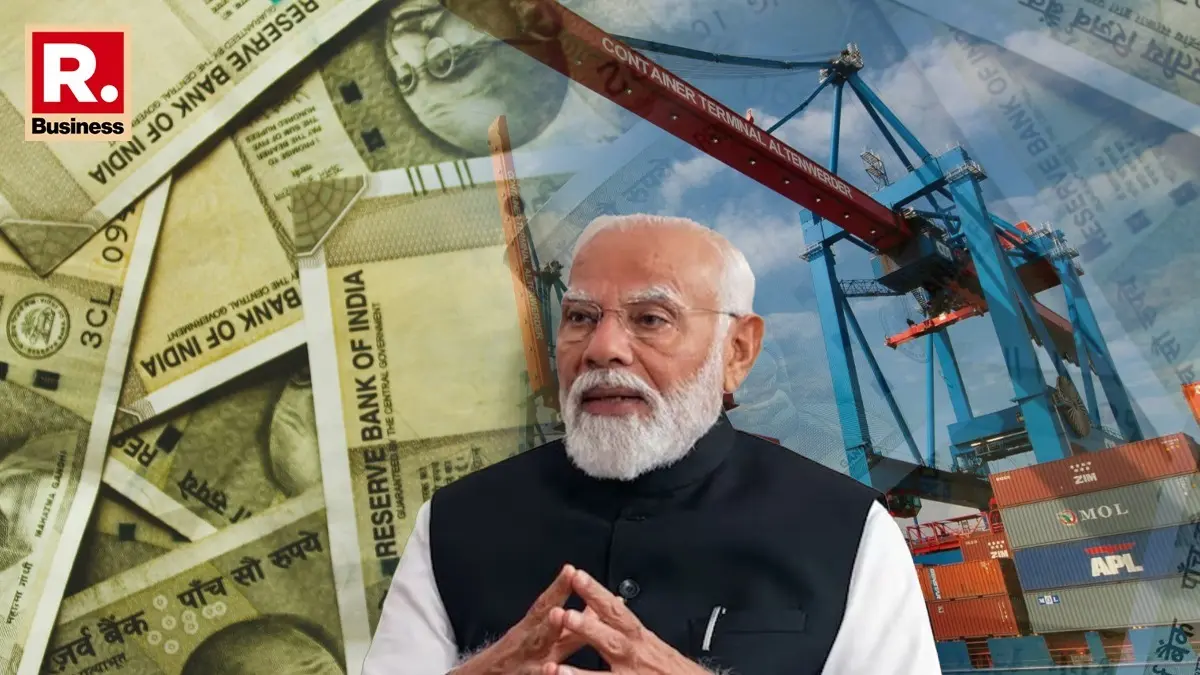
Addressing the Rajya Sabha during the Motion of Thanks debate on the President’s address, Prime Minister Narendra Modi said India is progressing rapidly on the path of Viksit Bharat, with growth accelerating across sectors. He said the country is moving in the right direction at a fast pace, and this momentum is being felt across urban and rural India.
The Prime Minister said India’s economic performance reflects growing confidence, with strong activity expected to continue into the second quarter as well. He added that citizens across the country are sensing that India has reached an important stage in its development journey.
India’s Global Economic Position Improving
PM Modi said India’s standing among global economies has significantly improved over the past decade. He noted that while India was among the world’s top economies at the time of Independence, its ranking slipped over the years due to policy decisions taken by previous governments.
According to the Prime Minister, sustained reforms and long-term planning have helped reverse this trend. He said India is now moving steadily towards becoming the world’s third-largest economy, supported by structural reforms, policy stability, and improved governance.
High Growth, Low Inflation a Key Strength
The Prime Minister highlighted that India is currently one of the few major economies combining high growth with relatively low inflation, calling it a rare and strong macroeconomic position. This stability has helped India emerge as a reliable growth engine at a time when global economies continue to face uncertainty, he noted, adding that India’s performance post-COVID has reinforced global confidence, with the country increasingly seen as a ray of hope amid economic and geopolitical challenges worldwide.
New Global Order, India as a Trusted Partner
PM Modi said the world is moving towards a new global order, similar to the shift seen after the Second World War. In this transition, India is increasingly being viewed as a trusted and reliable partner, or ‘vishwa bandhu’, by many countries.
He said India has also emerged as a strong voice for the Global South on international platforms, representing the concerns and aspirations of developing economies.
Future-Ready Trade Deals
Highlighting India’s trade strategy, the Prime Minister said the country is actively pursuing future-ready trade agreements. He pointed to the India–EU trade pact, reiterating it as “mother of all deals," he described as a major and comprehensive agreement, as well as the much-anticipated India–US trade deal.
According to PM Modi, these agreements are aimed at integrating India more deeply into global supply chains, boosting exports, strengthening manufacturing, and creating new opportunities for Indian businesses and workers.
Manufacturing, MSMEs and Youth at the Centre
The Prime Minister said India’s manufacturing ecosystem is being strengthened to compete globally, supported by reforms and policy initiatives. He emphasised the role of MSMEs, calling them the backbone of the economy and a key reason why global companies are increasingly trusting Indian suppliers.
He added that India’s young workforce stands to benefit across sectors, from technology and manufacturing to services, as global supply chains open up and demand for skilled Indian professionals rises.
Reform, Perform, Transform
The government’s approach has been guided by the principles of reform, perform, and transform, adding that India is now firmly on a “reform express,” PM noted, adding that consistent policy execution has helped build confidence in India’s long-term growth story.
He added that India’s development momentum is being reinforced by a key demographic advantage. While several advanced economies are grappling with ageing populations, India continues to grow younger, creating a strong foundation for long-term economic expansion. He said this demographic edge is helping India scale new heights of development even as global growth slows.
Banking Sector Clean-Up Strengthens Economy
The PM said his government has restored the health of the banking system by addressing long-standing stress. He noted that non-performing assets, once a major drag on credit growth, have been reduced to historically low levels of under 1%, improving bank balance sheets and reviving lending capacity across the system.
He criticised the lending practices that prevailed before 2014, alleging that political interference had weakened credit discipline and pushed the banking system close to crisis. He said loan approvals were often influenced by external pressure rather than financial assessment, leading to poor asset quality, limited access to credit for large sections of the population, and a sharp build-up of bad loans. According to him, reforms over the past decade have helped reverse this damage and restore stability to the banking sector.
PSUs See Turnaround
PM Modi also pointed to a sharp turnaround in public sector undertakings, saying PSUs that were once viewed as structurally loss-making are now delivering record profits. He attributed this to policy reforms, improved governance and accountability, adding that stronger PSU performance is contributing positively to overall economic stability.
Published February 5th 2026, 17:34 IST