Add Republic As Your Trusted Source




Add Republic As Your Trusted Source
Advertisement
Updated December 4th 2025, 17:37 IST
Key Economic And Business Announcements to Look Out for in India–Russia Summit Ahead of Putin's Visit
The upcoming India–Russia Summit, ahead of President Putin’s visit, is expected to deliver key trade, investment, labour mobility and currency-settlement announcements. The meeting aims to rebalance bilateral trade and deepen cooperation across energy, technology and industrial sectors.


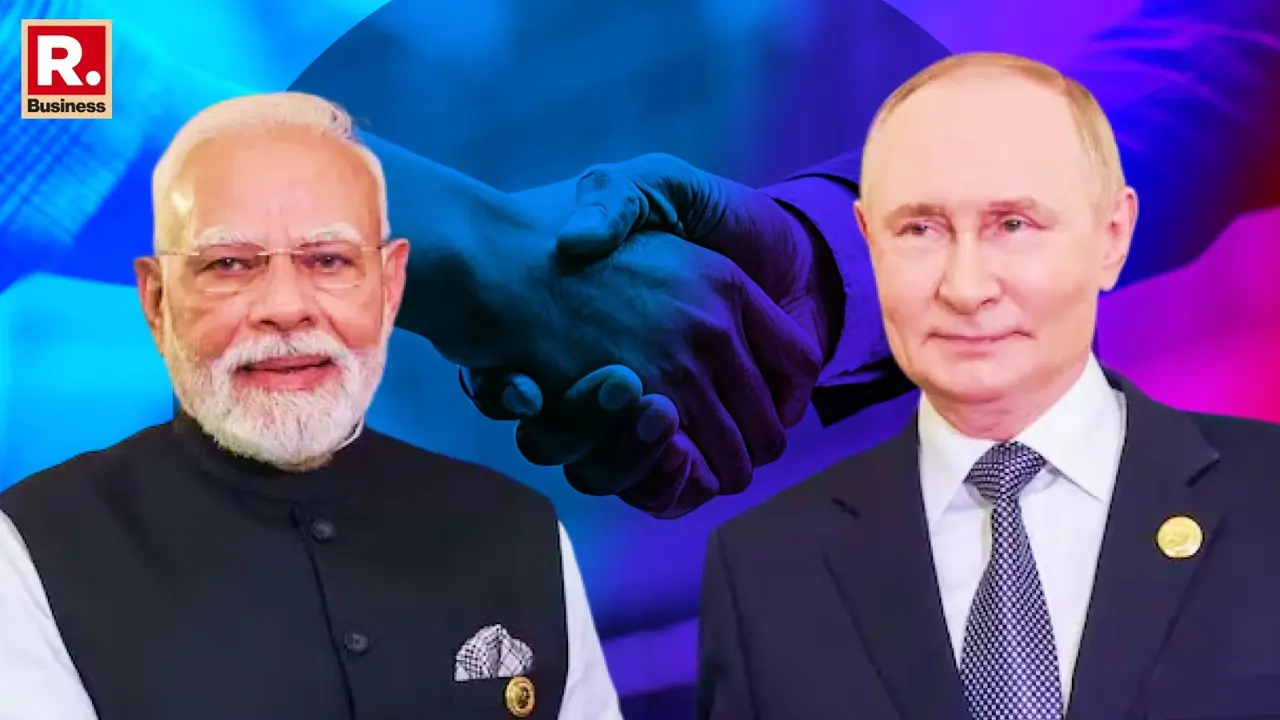
As New Delhi prepares to host Russian President Vladimir Putin for the annual India–Russia bilateral Summit, all eyes are on the economic and business outcomes likely to shape the next phase of the partnership. The visit comes at a time when both countries are attempting to strengthen long-standing ties while recalibrating them to reflect shifting global realities.
Officials on both sides have signalled that the summit may produce a mix of government-level commitments and commercial agreements that broaden cooperation beyond the traditional energy and defence pillars.
Trade, investment and market access push
India and Russia are expected to unveil a set of trade and investment announcements aimed at diversifying the current structure of bilateral commerce. While trade has surged in recent years—driven largely by India’s purchase of discounted Russian crude—the imbalance remains stark.
New Delhi has been keen to expand the presence of Indian goods in the Russian market, particularly in pharmaceuticals, engineering products, food and marine shipments. The summit is likely to see fresh sector-specific roadmaps and targeted market-access initiatives that address this gap.
Labour mobility and skills cooperation
One of the key items under negotiation is a labour mobility agreement designed to facilitate the movement of Indian workers to Russia. Moscow, grappling with a shrinking workforce, has shown interest in tapping into India’s large pool of skilled and semi-skilled talent. If finalised, such a pact could open new opportunities for Indian professionals and boost bilateral economic engagement beyond trade flows.
Currency settlement and financial coordination
With Western sanctions continuing to reshape Russia’s economic links with the world, both countries have been working toward wider use of local currencies in cross-border transactions. Discussions on expanding rupee-rouble settlement mechanisms, improving banking connectivity and easing compliance are expected to feature prominently. Progress on these issues would help reduce friction in payments, especially for small and medium exporters.
Energy, technology and industrial Projects
Beyond oil and coal purchases, the summit may also focus on long-term supplies of critical minerals, civil nuclear collaboration and joint industrial ventures. Discusssions around small modular reactors, petrochemicals and co-development of manufacturing projects could mark a shift toward deeper, technology-led cooperation, as per industry observers.
Published December 4th 2025, 15:12 IST