Add Republic As Your Trusted Source




Add Republic As Your Trusted Source
Advertisement
Updated September 24th 2025, 16:33 IST
Sensex Set For 13% Upside! HSBC Upgrades India—Will Retail Investors Lead Rally Amid Tariffs?
Indian equities are regaining investor confidence, with HSBC Global Investment Research upgrading the market to overweight from neutral, citing attractive regional valuations and resilient domestic flows.


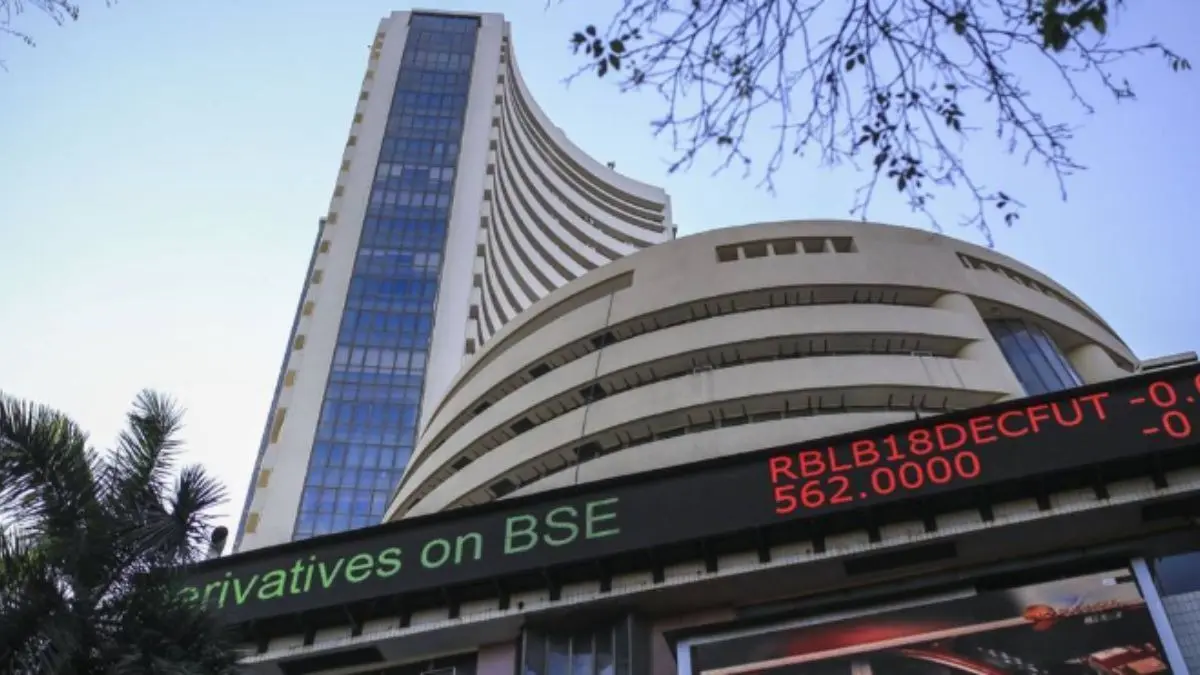
Global research firm HSBC has upgraded India’s equities to ‘Overweight’ from ‘Neutral’, highlighting improved valuations, supportive government policies, and resilient domestic investor flows.
The firm has also set a Sensex target of 94,000 by the end of 2026, implying a potential upside of over 13% from current levels.
This upgrade reflects HSBC’s confidence in India’s long-term growth trajectory despite global uncertainties and recent foreign portfolio outflows.
The BSE Sensex has been volatile over the past year, falling 3,198.41 points (-3.77%) over the last 12 months. However, year-to-date, the market has rebounded with a gain of 3,208.22 points (4.09%), supported largely by domestic investor inflows.
HSBC noted that recent US tariffs are unlikely to have a major impact on the profits of most listed Indian companies. While foreign investors have pulled significant amounts from the Indian market in the last year, during which the market underperformed, domestic investors have remained steady.
“While earnings growth expectations can fall a little further, valuations are no longer a concern, as the government policy is becoming a positive factor for equities, and most foreign funds are lightly positioned,” the firm said.
Across Asia, foreign investors have been net sellers this year, usually a negative sign for regional markets. Yet India has shown resilience, supported by strong retail inflows.
In contrast, Chinese equities, after a strong run in Hong Kong, now face uncertainty, while Korea and Taiwan remain crowded trades with elevated valuations.
Japan has benefited from a weaker yen, though corporate governance reforms alone may not sustain momentum. HSBC recently downgraded Korea to underweight, citing stretched valuations.
PL Wealth Sees Long-Term Strength
Closer to home, PL Wealth Management, the wealth arm of Prabhudas Lilladher, echoed optimism about India’s long-term trajectory while advising near-term caution. In its September 2025 Market Outlook, the firm highlighted that India’s GDP growth for Q1 FY26 came in at 7.8 per cent year-on-year, well above expectations of 6.9 per cent.
Growth was driven by robust manufacturing, strong government capex, and a favourable deflator. Additional support came from the GST rationalisation effective September 2025, which is expected to lift growth by 0.2–0.3 percent, spur consumption, and ease inflation.
Adding to the positives, S&P upgraded India’s sovereign rating to BBB (stable) after 18 years, citing resilience and fiscal prudence.
Inflation has also cooled, with CPI dropping to a 97-month low of 1.55 per cent in July 2025, creating room for potential rate cuts. Services activity remains buoyant, with the Services PMI at a 15-year high of 62.9 in August.
Tariff Headwinds, FPI Outflows, and Other Challenges
Despite the upbeat long-term picture, challenges remain. India is facing steep 50 per cent US tariffs on exports such as textiles, auto components, leather, gems, and shrimp, among the highest globally.
Punjab’s worst floods in four decades have damaged crops on 1.75 lakh hectares, threatening rural incomes.
Meanwhile, the merchandise trade deficit widened to USD 27.4 billion in July, an eight-month high, and urban demand remains fragile. Foreign portfolio investors pulled out USD 4 billion in August, marking the biggest monthly outflow in seven months.
Published September 24th 2025, 16:33 IST