Add Republic As Your Trusted Source




Add Republic As Your Trusted Source
Advertisement
Updated December 2nd 2025, 10:48 IST
Will You Pay Less For Tobacco? What The Central Excise (Amendment) Bill 2025 Means For Prices
Finance Minister Nirmala Sitharaman will move the short but crucial legislation that directly affects the price of every cigarette, beedi, chewing tobacco pack, zarda, and gutkha sold in India. The Union government will table the Central Excise (Amendment) Bill, 2025, in Lok Sabha today.


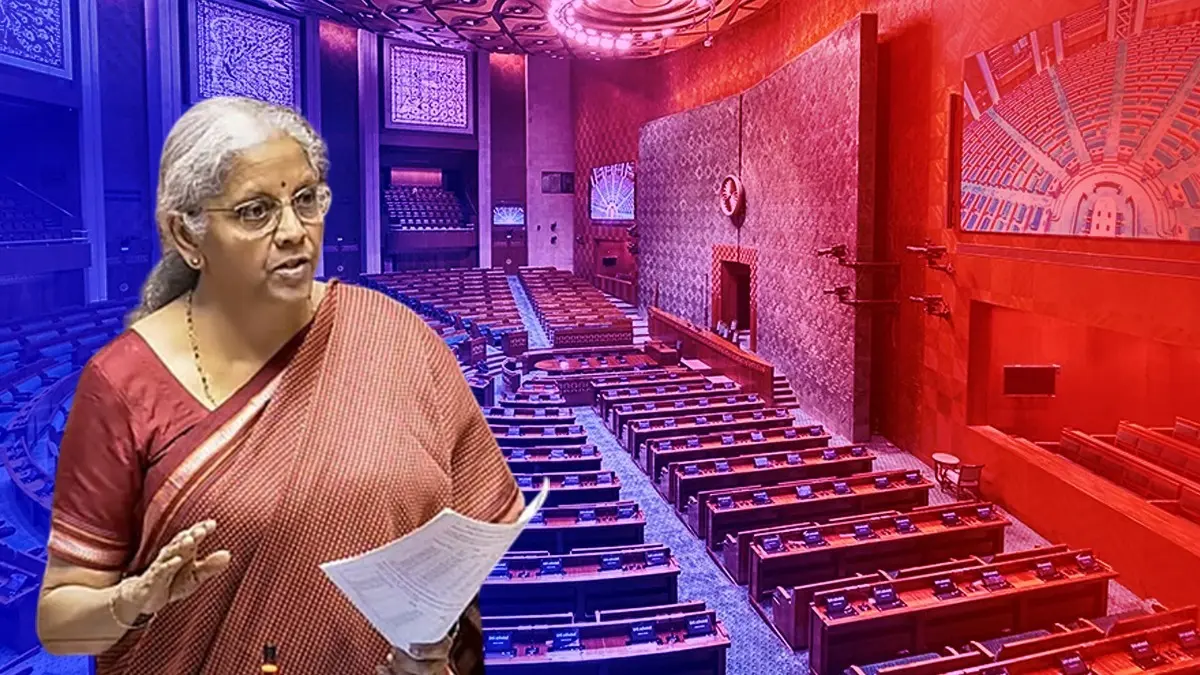
The Union government will table the Central Excise (Amendment) Bill, 2025, in Lok Sabha today for discussion and passage. Finance Minister Nirmala Sitharaman will move the short but crucial legislation that directly affects the price of every cigarette, beedi, chewing tobacco pack, zarda, and gutkha sold in India.
In simple words, the bill is a “tax-switch” exercise so that tobacco does not suddenly become cheaper when a temporary tax ends.
What is Happening in Parliament Right Now?
The bill was formally introduced on Monday (December 1) amid noisy protests by Opposition MPs over the ongoing Special Intensive Revision of electoral rolls. Despite repeated adjournments, the government completed the introduction.
Today, the Finance Minister will ask the House to take up the bill for detailed discussion and voting.
Why is This Bill Needed at All?
When GST was launched in July 2017, the Centre sharply cut the Central Excise duty on tobacco products. The cut was deliberate; it created room to slap a very high GST Compensation Cess on cigarettes, gutkha, etc., without making the final price jump too sharply for consumers.
That Compensation Cess was always temporary. Its only job was to help states recover revenue lost because of GST and to repay the special loans the Centre took for five years (2017-22). Those loans and interest are almost fully repaid now, so the Compensation Cess will soon be switched off.
If nothing is done, the moment the cess goes away, the total tax on tobacco will fall sharply and every tobacco product will become noticeably cheaper overnight. The government does not want that – both for health reasons and revenue reasons.
"Compensation cess levied on tobacco and tobacco products, wherever applicable, will be discontinued once interest payment obligations and loan liabilities under the compensation cess account are completely discharged. In order to give the Government the fiscal space to increase the rate of central excise duty on tobacco and tobacco products so as to protect tax incidence, it is imperative to amend the table in Section IV of the Fourth Schedule to the said Act," according to the bill's 'statement of object and reasons.'
The Central Excise (Amendment) Bill, 2025 simply raises the old Central Excise duty rates so that the final tax paid by companies (and ultimately by smokers and chewers) stays almost the same even after the cess disappears.
What Exact Changes Does the Bill Make?
The bill replaces the duty table for tobacco in the 81-year-old Central Excise Act, 1944. Some of the big jumps are:
| Product | Old Basic Excise Duty | New Basic Excise Duty (Proposed) |
|---|---|---|
| Unmanufactured tobacco | 64% | 70% |
| Chewing tobacco, zarda, gutkha | 25% | 100% |
| Snuff | 25% | 70% |
| Cigars & cheroots | 12.5% or Rs 4006 per thousand | 25% or Rs 5000 per thousand (whichever is higher) |
| Non-filter cigarettes | Rs 200 - Rs 545 per thousand | Up to Rs 2700 - Rs 7000 per thousand |
| Smoking mixtures for pipes & hookah | 60% | 325% |
These are basic excise rates. On top of this, regular GST at 28% + any remaining cess (till it ends) will still apply.
What Should a Consumer Know?
No price drop coming: The whole purpose of the bill is to ensure that cigarette, beedi, gutkha, and zarda prices do not fall when the Compensation Cess ends.
Prices may even go up a bit: Companies usually pass on any extra duty immediately. Some brands have already printed new higher MRPs, expecting the bill to pass.
Health angle: Higher and stable taxation is part of India’s official policy to discourage tobacco use.
Timeline: The new rates will be effective only after the bill becomes law and the government notifies the date, likely in early 2026, once the cess is fully phased out.
Companion Move on Pan Masala
A separate bill (the Health Security and National Security Cess Bill, 2025) is also in the works for pan masala and similar products. It will replace the cess with a new cess calculated on the speed and capacity of packing machines instead of actual production, a step to stop under-reporting.
Other Business in Lok Sabha Today
Besides the tobacco tax bill, the House will take up a few routine but important items:
BJP MP Bhartruhari Mahtab and TDP MP Vemireddy Prabhakar Reddy will table two key reports of the Parliamentary Standing Committee on Finance:
- 27th Report: Performance review of the National Statistical Commission (NSC)
- 28th Report: How the Insolvency and Bankruptcy Code (IBC) is working on the ground and the new challenges that have cropped up
Commerce and Industry Minister Piyush Goyal will move a motion to elect two members to the Rubber Board.
Bottom Line
This is not a new tax out of the blue. It is a carefully planned handover so that one of the world’s highest tobacco tax regimes stays intact even after the GST transition period ends. For the average smoker or tobacco chewer, the packet in the pocket will cost roughly the same (or slightly more) next year, exactly as the government intends.
Published December 2nd 2025, 10:48 IST