Add Republic As Your Trusted Source




Add Republic As Your Trusted Source
Advertisement
Updated July 24th 2025, 20:43 IST
Decaying Metal: The Tragic Twilight of India’s Jaguar Fleet and the Cost of Bureaucratic Paralysis
Can India Wait Until 2040? The Desperate Calculus of Squadron Shortages. The IAF’s dilemma: retire Jaguars and risk squadron numbers collapsing, or fly them and risk to pilots.


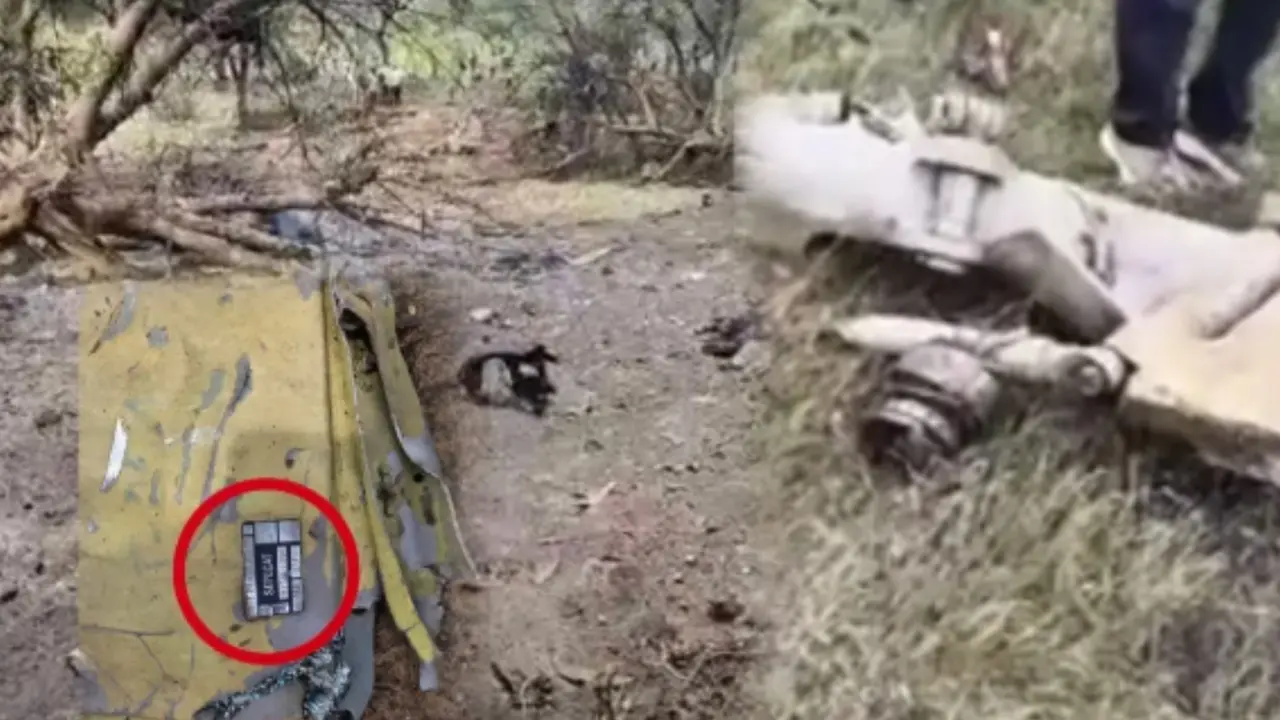
July 9, 2025, Bhanoda Village, Rajasthan – At 10:42 AM, farmers near Churu looked up to see a Jaguar trainer trailing smoke before it slammed into the arid earth. Squadron Leader Lokendra Singh Sindhu, 31, and Flight Lieutenant Rishi Raj Singh, 23, chose not to eject and save the people below.
Their bodies were recovered from the scattered debris – sacrifices to an aircraft older than their combined ages. This was the third Jaguar crash in four months, adding to a grim tally: 31 aircraft lost and 19 pilots killed since 1979. As Defence Minister offered condolences, veterans asked: When will the government stop mourning pilots and start modernizing the IAF?
Why Do Pilots Keep Dying in 50-Year-Old Jets? The 2025 Crash Epidemic Exposes Systemic Failure
The Jaguar’s death toll in 2025 reads like an indictment:
- March 7, Ambala: Jaguar IS crashes during climb; pilot ejects after steering away from homes
- April 2, Jamnagar: Jaguar IB suffers engine failure; Flt Lt Siddharth Yadav dies saving his instructor
- July 9, Churu: Trainer jet disintegrates mid-air, killing both pilots instantly
The Jaguar’s Deadly Legacy (2015-2025)
| Period | Crashes | Pilot Deaths | Primary Causes |
| 2015-2020 | 9 | 5 | Engine failure, structural fatigue |
| 2021-2024 | 7 | 4 | Avionics malfunction, hydraulic leaks |
| 2025 (till July) | 3 | 4 | Suspected system failures |
Retired Jaguar pilot: "Flying Jaguars now is like racing a vintage car at Formula One speeds. The airframes are tired, the systems brittle". Investigations repeatedly cite the Rolls-Royce Adour Mk 811 engines – underpowered and prone to flameouts in India’s hot climate. With original manufacturers long shuttered, the IAF has cannibalized retired jets from Oman and the UK for parts, a stopgap solution for prolonging a dying fleet.
What Made the Jaguar India’s “Sword of Justice” in 1979? The Untold Story of a Strategic Masterstroke

Rewind to 1978: India signs a landmark $1 billion deal for 40 British Jaguars plus 120 license-built by HAL. Codenamed "Shamsher" (Sword of Justice), they arrive as Pakistan acquires F-16s. The Jaguar’s design was revolutionary:
- Terrain-Hugging Prowess: Could fly at 100 feet, evading radar with "nap-of-the-earth" agility
- Nuclear Strike Capability: Designed for tactical nuke delivery, becoming India’s aerial deterrent
- Payload Beast: 10,500 lbs of bombs – double the MiG-23’s capacity
Air Marshal Philip Rajkumar (Retd), who flew the first Jaguars, recalls: "In the 1980s, nothing matched its low-level precision. It was our psychological sword against Pakistan". HAL’s Nashik plant became a hub, indigenizing 70% of airframes by 1990. Yet a fatal flaw persisted: Britain never transferred engine technology, leaving India dependent on imported Adour engines.
Can a 45-Year-Old Jet Win a War? How Jaguars Became Kargil’s Unsung Heroes
1999, Himalayan skies: Pakistani bunkers perched at 18,000 feet prove immune to laser-guided bombs. The Jaguar’s finest hour began with improvisation:
- Reconnaissance Masters: Equipped with Vinten cameras, they mapped enemy positions along 150 km of peaks
- Cluster Bomb Pioneers: Dropped CBU-87 munitions to clear high-altitude infiltrators
- Bait and Switch: Lured Pakistani Stinger missiles away from vulnerable helicopters
Armor plating were stripped lighten jets for high-altitude sorties. Pilots flew 6-hour missions with oxygen masks glued to their faces". The result: 500+ sorties without a single loss – a testament to the jet’s ruggedness and pilot skill. Yet even then, the Adour engines struggled in thin air, foreshadowing future limitations.
Why Did HAL and MoD Fail the Fleet? The Autopilot Scandal That Killed Pilots
The 2017 CAG Report (No. 24) exposes a scandal:
Timeline of the 20 Year Bureaucratic Murder
- 1997: IAF requests 108 autopilots to reduce fatal “pilot disorientation”
- 1999: MoD orders only 35, citing "resource crunch"
- 2017: Only 18 installed due to HAL "manpower shortages"; APEU units failing
- 1997: IAF flags need for autopilots after 3 disorientation crashes
- 2008: CAG warns HAL/MoD in Report CA 18; ignored
- 2014: MoD finally orders 95 more – 43 months late per DPP rules
- 2017: Only 18 operational; pilots dying as APEUs sent to France for Repair and maintenance with a turn around time of 26 months
The cost? 7 preventable crashes between 2000-2016: MoD treated autopilots like office furniture orders, not life-saving gear. Pilots paid for their negligence.
Is Patchwork Modernization Enough? DARIN Upgrades vs. Metal Fatigue
The IAF’s DARIN (Display Attack Ranging Inertial Navigation) program epitomizes technological ambition hamstrung by ageing platforms:
- DARIN-I (1980s): Basic digital nav-attack systems
- DARIN-II (2000s): Added GPS, autopilot, laser-guided bombs
- DARIN-III (2020s): Israeli AESA radar, AI mission computer, Rampage missiles (150 km range)
Yet these upgrades sit in airframes with 5,000+ flight hours. Wing root cracks plague the jets, while landing gear corrosion is a big issue at coastal bases : even with replaced wings, rewired cockpits, even newer parts. But metal fatigue is irreversible . The upgrades created a paradox: advanced jets trapped in decaying bodies.
Who Killed the Jaguar MAX? The $3 Billion Re-Engine Dream That Vanished
In 2010, hope emerged: Honeywell’s F125IN engine offered 43.8 kN thrust (+30%) with afterburners. The Jaguar MAX promised:
- Extended service to 2040
- 40% faster climb rate
By 2019, the project was dead. why:
- MoD Bungling: Demanded HAL absorb integration costs, despite no ToT
- Price Gouging: Honeywell doubled quotes from $1.6B to $3B
- Single-Vendor Trap: Rolls-Royce withdrew, violating procurement rules
The cancellation stranded India with Adour engines losing 15-30% thrust due to compressor erosion.
Can India Wait Until 2040? The Desperate Calculus of Squadron Shortages
The IAF’s dilemma: retire Jaguars and risk squadron numbers collapsing, or fly them and risk to pilots.
- Squadron Strength: 31 vs. sanctioned 42.5
- Phasing Out: Starts 2027-28; ends 2035-40
- Replacements: Tejas MkII (delayed till 2030), MRFA fighters (stuck in trials)
With Tejas MkII delayed, the IAF may extend Jaguars post-2040 choosing between operational oblivion and flying coffins.
The Last Jaguars – A Requiem for the Unmourned
As Britain’s Jaguars are in museums, India’s limp on, their roar drowned by the echoes of bureaucratic paralysis. Each crash site Churu, Jamnagar, Ambala….. are active crime scenes, where pilots like Squadron Leader Lokendra Singh Sindhu, Flight Lieutenant Rishi Raj Singh, and Siddharth Yadav paid the supreme sacrifice because files didn’t move. India took 46 years to field just 40 Tejas jets, while China churned out over 500 J-series fighters and the US built 6,000 F-series beasts. Since 1979, the IAF desperately required modern replacements; instead, 400+ MiGs and 31 Jaguars crashed, claiming over 200 pilots.
The Tejas saga—approved in 1983, studied for a decade, flown toothless in 2001, and combat-ready only in 2019—mirrors the Jaguar’s fate: Kaveri engines promised but never delivered, national ego trumping soldier lives.
Group Captain Bajpai (Retd) delivers on a somber note: “A soldier dying in battle is sacrifice. A soldier dying because his jet failed? That’s shame.” As Rajasthan’s winds scatter jaguar’s ashes, India faces a choice: end the MoD’s inertia and honor the nations bravest pilots with jets that don’t betray them, or brace for more unmourned requiems.
Published July 24th 2025, 20:43 IST