Add Republic As Your Trusted Source




Add Republic As Your Trusted Source
Advertisement
Updated July 24th 2025, 21:15 IST
Netra: India’s Proud Sentinel The Ever‑Vigilant Guardian of the Indian Skies
On 17 July 2025, India’s Defence Acquisition Council (DAC) and the Cabinet Committee on Security (CCS) bestowed final approval on the Netra Mk II AWACS project—an investment of ₹20,000 crore that will transform six Airbus A321 jets into indomitable airborne guardians.


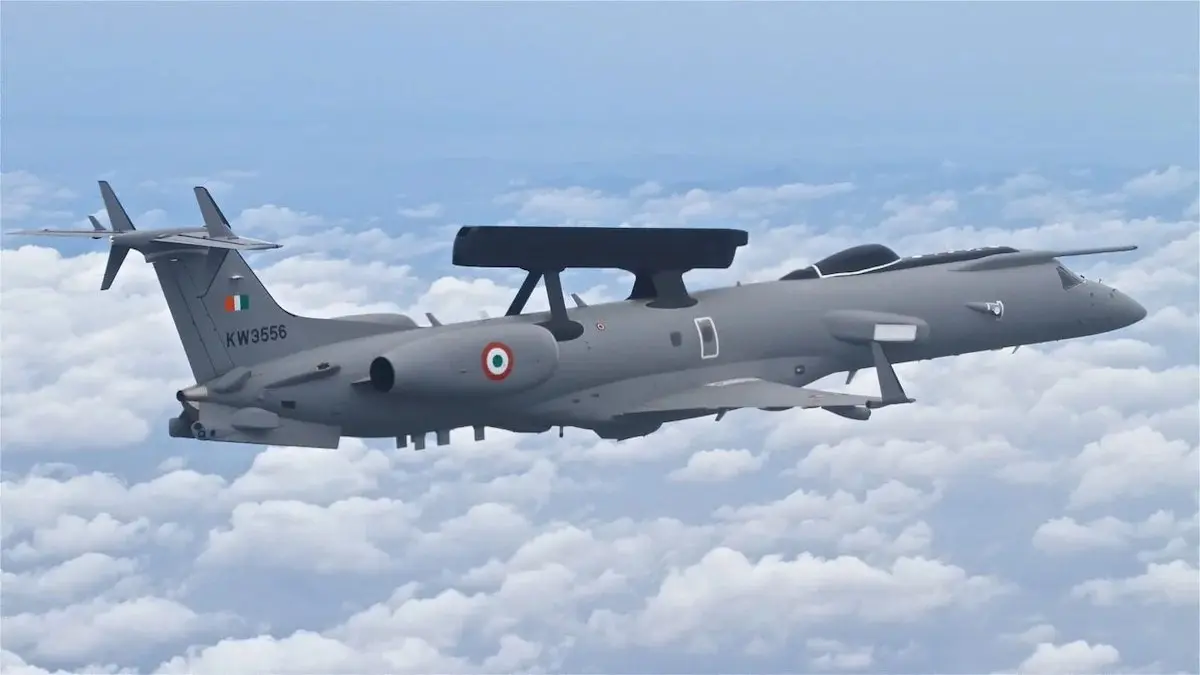
New Delhi: India stands at the threshold of a new era in aerial supremacy. With the recent ₹20,000 crore green light for the Netra Mk II AWACS programme, New Delhi has reaffirmed its unshakable commitment to protecting every inch of the nation’s airspace. This landmark decision ushers in a truly home‑grown “eyes in the sky” capability, combining swiftness of deployment, cutting‑edge technology, and the fierce pride of an Aatmanirbhar Bharat.
Shield the Skies
On 17 July 2025, India’s Defence Acquisition Council (DAC) and the Cabinet Committee on Security (CCS) bestowed final approval on the Netra Mk II AWACS project—an investment of ₹20,000 crore that will transform six Airbus A321 jets into indomitable airborne guardians. This decisive vote of confidence is more than a budget line: it’s a solemn promise to every Indian citizen that our skies will remain inviolate, overseen by fiercely patriotic “eyes” that never rest.
Rather than waiting years for new airframes, DRDO has ingeniously repurposed six surplus Airbus A321s handed over by Air India. This strategic shortcut delivers:
- Rapid readiness: First Netra Mk II takes flight by 2026–27, full squadron by 2028.
- Fiscal prudence: Reused platforms slash costs, channeling savings into mission‑critical systems.
- Industrial empowerment: Air India sheds legacy liabilities; Indian firms (BEL, Adani Aerospace, Astra Microwave) gain vital expertise.
Together, we reclaim these proud airliners and forge them into fierce sentinels—proof that India’s resolve and ingenuity can outpace any challenge.

Why “Eyes in the Sky” Matter
At its core, an AWACS aircraft is a tactical command post in the sky, combining advanced radar, communications, and battle‑management systems on a high‑altitude platform. Here’s what makes AWACS indispensable:
- Long‑range detection: Can spot aircraft, missiles, ships, and other targets 400–550 km away far beyond ground radars capabilities.
- Battle management: Operators direct fighter interceptions, deconflict airspace, and coordinate multi‑domain assets in real time.
- Force multiplication: Even a handful of AWACS can dramatically amplify situational awareness and response speed.
- Deterrence: Simply flying over a potential conflict zone signals readiness and command‑control capability.
From coordinating search‑and‑rescue to orchestrating large‑scale air campaigns, AWACS platforms have become the linchpin of modern air defence.
Current AWACS Fleet: Foundation for Growth
Before the Netra Mk 2 rollout, the Indian Air Force (IAF) relied on two main types of airborne warning platforms:
Platform | Airframe | Radome / Radar | Fleet Size | Service Entry |
Phalcon AWACS | IL‑76 + EL/W‑2090 | AESA radome, 360° coverage; 400–500 km range | 3 | 2009–2011 |
Netra Mk 1 | Embraer ERJ‑145 | Twin‑antenna AESA, ~240° coverage; 250–375 km range | 3 (+1 R&D) | 2017 |
- Phalcon: Imported from Israel, these workhorses deliver strategic‑level surveillance but have faced availability and maintenance challenges.
- Netra Mk 1: India’s first indigenously designed AEW&C, delivering proven performance during the 2019 Balakot strikes and at the G20 Summit.
Closing the Regional Gap: Racing China and Pakistan
Our neighbours are not standing still. China boasts a robust AEW&C roster of over 50 aircraft, spanning:
- KJ‑2000 (Il‑76 base, fixed AESA; ~4–5 units)
- KJ‑200/KJ‑500 (Y‑8/Y‑9 bases; ~45+ units combined)
- Next‑gen KJ‑600/KJ‑3000 under development.
Pakistan fields approximately 10 AEW&C platforms, including:
- Saab 2000 Erieye (~7 units, 450 km range)
- KJ‑500 acquisitions in progress.
While India’s six active platforms may lag in numbers, the launch of the Netra Mk 1A and Mk 2 mark a qualitative leap bringing longer ranges, higher altitudes, and advanced data‑fusion capabilities that will help bridge the coverage gap and cement India’s status as a credible regional aerial surveillance power.
The Road Ahead: Building an Unrivalled Fleet
From inception to execution, DRDO’s dedicated teams of scientists, engineers, and technical experts have been working around the clock to transform India’s AWACS vision into reality. From perfecting the GaN‑based AESA radar algorithms in Netra Mk 1A to finalizing the structural modifications and mission‑system integration plans for the A321‑based Netra Mk II, every department from CABS and LRDE to ADE has collaborated seam. Their efforts on high‑power transmitter design, airborne data‑fusion networks, and stringent flight‑qualification trials underscore DRDO’s commitment to delivering world‑class, indigenous airborne warning and control capabilities that will stand sentinel over our nation’s skies providing oomph to IAF’s ambitious blueprint through 2030:
- Netra Mk 1A (ERJ‑145 upgrade):
- 6 jets, GaN‑AESA (~450 km), in‑flight refuelling, advanced EW suite.
- Delivery 2026–2029.
- Netra Mk II (Airbus A321):
- 6 jets, multi‑antenna AESA giving 300° coverage plus nose radar, detection to 550 + km.
- Squadron complete by 2028.
- Netra Mk III (Developmental stage):
- Rotodome on A330 airframe, 360° AESA, stealth‑fighter detection to 600 km+.
- R&D post‑2027.
By 2030, the IAF is expected to field 18 world‑class AEW&C platforms, an unassailable shield over our Nation.
Beyond Defence: Catalysing India’s Aerospace Might
Beyond bolstering our nation’s defence, the Netra programme is turbocharging India’s ascent as a global aerospace powerhouse. Under the banner of Atmanirbhar Bharat, every radar, data‑link and mission suite is conceived, designed and manufactured on Indian soil proof that our scientists and engineers stand shoulder‑to‑shoulder with the world’s best. The Make in India dividend is already rippling through the supply chain: stalwarts like BEL, Astra Microwave and Adani Defence & Aerospace are joined by dozens of innovative SMEs, collectively sharpening India’s competitive edge in high‑end avionics and systems integration. And this is more than domestic self‑reliance; it’s an opportunity for strategic export. A reliable, cost‑effective Netra family—backed by proven performance and Indian ingenuity—could soon find its way into the fleets of friendly nations seeking world‑class airborne surveillance. In every sense, this isn’t merely a defence project—it’s a clarion call, a testament to our industrial might, and a vivid expression of the patriotic spirit driving India’s skies forward.
This programme isn’t just about defence; it’s a clarion call showcasing India’s industrial prowess and patriotic spirit.
A New Dawn For Airborne Vigilance
Sure, converting civilian airliners to weapons‑grade AWACS is no small feat. Integrating high‑power AESA radars, mastering complex flight‑testing, and adhering to a tight three‑year timeline will test DRDO’s engineers and scientists have defied the odds. With a nation’s hopes riding on their wings, failure is simply not an option.
Now with ₹20,000 crore fueling the Netra Mk II dream, India has embarked on the most ambitious airborne surveillance endeavour in its history. These converted A321 sentinels will rise as symbols of national pride, standing guard over our borders, seas, and skies. When the first Netra Mk II lifts toward the clouds in 2026, all of India will bask in the assurance that our skies remain sacrosanct.
Published July 24th 2025, 21:15 IST