Add Republic As Your Trusted Source




Add Republic As Your Trusted Source
Advertisement
Updated June 16th 2024, 13:26 IST
EVM-VVPAT Case: SC Junks Pleas on 100% Verification of Votes, Says 'Blindly Doubting System Can...'
SC rejected all pleas seeking complete verification of the votes recorded in the EVMs with VVPAT slips.


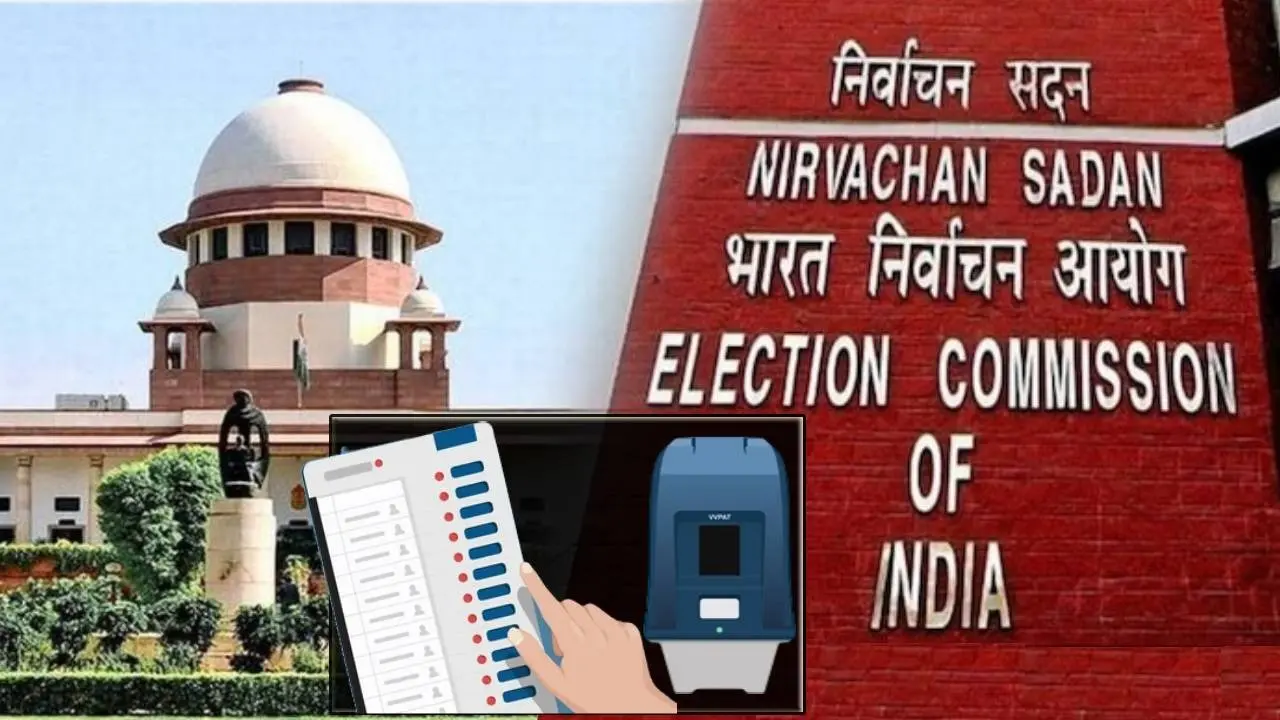
New Delhi: The Supreme Court on April 26 announced the much-anticipated verdict on the EVM-VVPAT verification case, rejecting all pleas seeking complete verification of the votes recorded in the EVMs with VVPAT slips.
The two-judge bench of Justice Sanjiv Khanna and Justice Dipankar Datta delivered concurrent but separate judgments. They noted that democracy is ‘about striving to build harmony and blindly distrusting poll process can lead to unwarranted suspicion.’
The apex court, however, passed two directions — one direction is after the completion of the symbol loading process, the Symbol Loading Unit (SLU) should be sealed and they should be stored at least for 45 days.
The second direction issued by the Supreme Court is that there will be an option for candidates to get the microcontroller program of EVMs to be checked by a team of engineers after the declaration of results, such a request is to be made by the candidate within seven days after the declaration of results.
The court suggested the poll body to explore the possibility of using a machine to count VVPAT slips. It added that if a candidate seeks cross-verification of the voting method, he/she must pay for it and if the EVM in question is found to have tampered, the payment must be refunded.
The verdict came when voting for the second phase of the Lok Sabha election 2024 is underway with crores of voters polling their rights in 88 seats across 13 states and Union Territories.
EVM-VVPAT Case: Key Points of Judgement
- The apex court had on Thursday reserved its judgement in the EVM-VVPAT verification case, stating that it is not the controlling authority for elections and cannot dictate the functioning of the Election Commission.
- Amid the opposition unease, regarding the voting system through EVM-VVPAT, the petition sought a direction to cross-verify every vote cast on EVMs with the paper slips generated by the VVPAT system. For information, the cross-verification method is already implemented but it's done for five randomly selected EVMs in every Assembly constituency. However, the pleas sought 100 per cent cross-verification.
- In earlier hearings, the petitioners pinned the case on public trust and apprised the court of practice in European countries which has gone back to the ballot voting system.
- The apex court, however, brushed off such arguments stating that challenges in India are different than of European countries. Tabling their side, the Election Commission asserted that the current system is foolproof.
EVM Voting: How Things Work
The Electronic Voting Machine (EVM) has two units- a control unit and a balloting unit, with both of them connected via a cable. These units are also connected with a VVPAT -- Voter Verified Paper Audit Trail -- machine.

VVPAT machine gives space to voters to see if the vote was cast accurately and went to the candidate of their choice, enhancing transparency in the voting method. The balloting unit is usually covered on all sides for the voter's privacy.
Published April 26th 2024, 10:43 IST