Add Republic As Your Trusted Source




Add Republic As Your Trusted Source
Advertisement
Updated July 24th 2025, 21:33 IST
Lessons From Operation Sindoor: India's Military Modernization Blitz Revealed
When India launched Operation Sindoor in May 2025 to neutralize cross‑border terrorist infrastructure, it quickly became clear that certain critical capabilities were lacking.


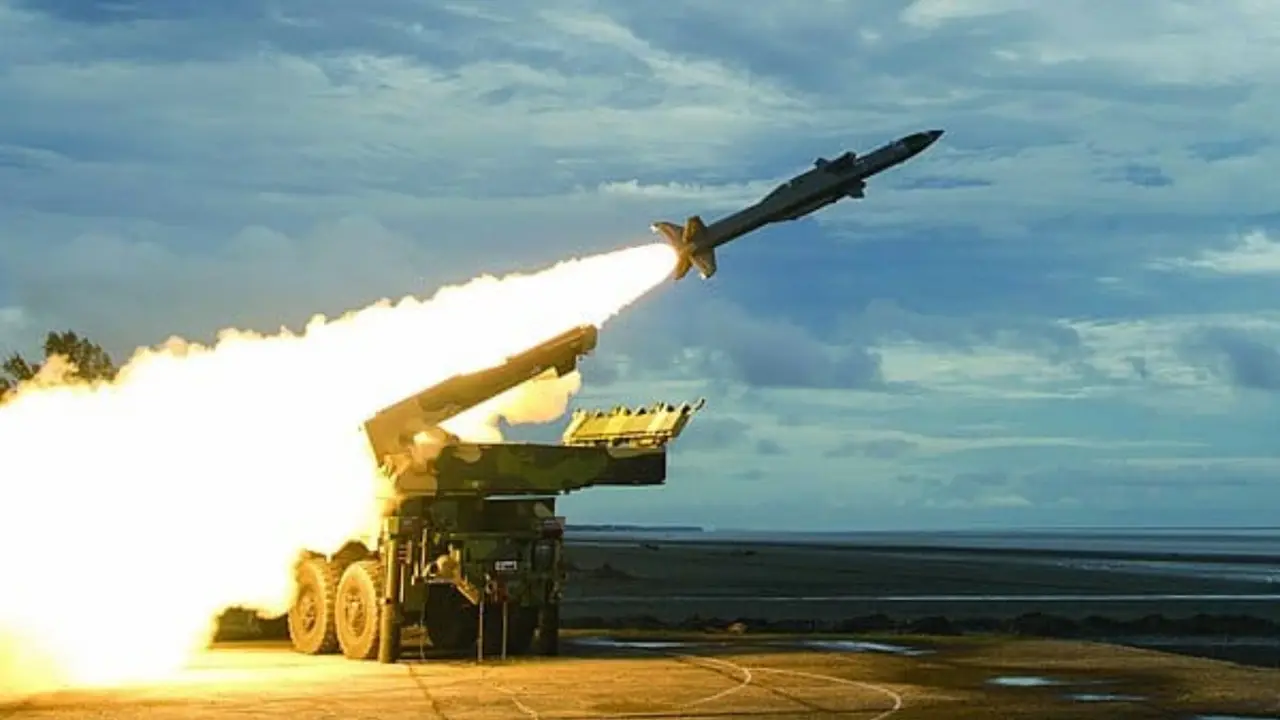
New Delhi: In the aftermath of Operation Sindoor, the Indian Ministry of Defence has sanctioned over Rs. 1.2 lakh crore in new procurements between June and July 2025. These range from emergency Army contracts to landmark tri‑service capital acquisitions, reflecting a strategy: plug urgent capability gaps realised during OP Sindoor, and build sustained, indigenously powered force‑multipliers under “Make in India.” We unpack each tranche of approvals, details marquee systems and their roles, and assess their broader strategic impact.

When India launched Operation Sindoor in May 2025 to neutralize cross‑border terrorist infrastructure, it quickly became clear that certain critical capabilities were lacking. Front‑line units encountered swarms of hostile drones for which there were insufficient detection and interdiction systems, while low‑altitude surveillance holes left advanced parties exposed. Equally, mechanized formations lacked rapid‑reaction fighting vehicles suited to surge past fortified positions, and soldiers operating under fire found their personal‑protection gear stretched to its limits. These shortfalls underscored the need not only for new acquisitions but also for the replenishment of depleted stockpiles of missiles, ammunition, and loitering munitions expended during the strikes. In response, Defence Minister Rajnath Singh invoked the Emergency Procurement route and accelerated broader acquisition channels to address both the acute vulnerabilities of OP Sindoor and the systemic gaps in India’s force posture.
Ministry of Defence fast‑track Army contracts to fill urgent needs
24 June 2025, the MoD approved thirteen emergency contracts worth ₹1,981.90 crore under the Fast‑Track procedure, targeting immediate restoration and enhancement of Army capabilities. Integrated Drone Detection & Interdiction Systems (IDDIS) were greenlit to jam and neutralize unmanned aerial threats, while low‑level light‑weight radars will plug holes in short‑range air surveillance along contested borders. To shore up air defence, Very Short‑Range Air Defense launchers and missiles are being procured, and loitering munitions alongside RPAV drones will grant forward units organic reconnaissance and precision‑strike capacity. Acknowledging losses from OP Sindoor’s offensive tempo, the MoD has also earmarked fresh deliveries of high‑caliber ammunition and guided rockets, ensuring that depleted stockpiles are rapidly replenished. Simultaneously, orders for next‑generation bulletproof jackets, ballistic helmets, night‑vision weapon sights, and Quick Reaction Fighting Vehicles will restore soldier protection and mobility to pre‑conflict strengths—all within a compressed twelve‑month timeline.
Capital acquisition proposals set the stage for comprehensive modernization
On 3 July 2025, the Defence Acquisition Council granted Acceptance of Necessity to ten indigenously sourced capital‑acquisition proposals totaling Rs. 1.05 lakh crore. These programs span the breadth of joint operational needs: a tri‑service Electronic Warfare network will unify jamming and deception across Army, Navy, and Air Force; an Integrated Common Inventory & Mobility Management System will link depots from Leh to Port Blair in real time; and new Surface‑to‑Air Missile regiments will expand layered air defence along vulnerable axes. Complementing these are guided extended‑range rockets and area‑denial munitions for precision fires, armoured recovery vehicles to keep tank columns combat‑ready, and naval platforms—Super Rapid Gun Mounts, submersible autonomous vehicles, and Mine Counter‑Measure Vessels—to secure Indian waters. By insisting on the IDDM (Indigenously Designed, Developed, and Manufactured) buy category, the MoD has ensured that these long‑term acquisitions both modernize the forces and seed growth in India’s defense‑manufacturing ecosystem.
High‑Value standalone systems to define India’s future edge
Beyond package deals, July 2025 saw several marquee procurements come into sharp relief. The Nagastra‑1 loitering anti‑tank guided missile, at ₹160 crore for the initial batch, has already been fielded to engage armoured threats up to 30 km away. A monumental ₹26,968 crore was earmarked for Phase III of the Space‑Based Surveillance Network—deploying 52 satellites by 2029—to provide persistent electro‑optical, SAR, and SIGINT coverage of India’s borders and maritime approaches. The indigenous Quick Reaction Surface‑to‑Air Missile system, at ₹30,000 crore for three regiments, promises mobile point‑defence for armoured formations. India’s service chiefs also green‑lit follow‑on orders for Rampage supersonic air‑to‑ground missiles, emergency‑inducted during OP Sindoor, and are fast‑tracking delivery of BEL’s low‑level drone‑detection radars. Meanwhile, RFIs for 155 mm precision‑guided artillery shells and development of high‑altitude pseudo‑satellites signal the dawn of networked, data‑driven warfare, with real‑time targeting from ground to stratosphere.
What strategic implications emerge from this blitz of procurements?
The juxtaposition of rapid emergency buys with methodical, high‑value capital acquisitions embodies India’s two‑track strategy: immediate gap‑filling and long‑term modernization. Emergency contracts remedied vulnerabilities laid bare by Operation Sindoor, while the ₹1.05 lakh crore IDDM portfolio charts the Army, Navy, and Air Force toward interoperable, network‑centric operations. By prioritizing indigenous systems—from loitering drones to space‑based ISR—the MoD reduces foreign dependencies and strengthens supply‑chain sovereignty. The infusion of precision munitions and EW assets shifts the Indian military from platform‑centric silos to an integrated, data‑fused force. Crucially, replenishing exhausted stockpiles ensures that gains won in OP Sindoor are not squandered by attrition, preserving deterrence through sustained readiness.
How will India sustain and build upon these modernization gains?
Looking ahead, the challenge lies in seamless induction, crew training, and lifecycle support for scores of new systems. Production lines—from Solar Industries’ loitering munitions to private satellite‑builders under Phase III—must scale up without bottlenecks. Tri‑service exercises will need to weave EW networks, precision rockets, and space ISR into coherent doctrines. Maintenance and spares chains, reinforced by the new Common Inventory System, must anticipate wear from harsh terrain and constant operational use. And as depleted stocks are replenished, procurement planners must balance fresh buys against efforts to upgrade legacy platforms. Success will depend on robust public–private partnerships, streamlined export approvals to sustain domestic volumes, and an evolving policy framework that rewards innovation while enforcing rigorous field testing.
How does this blitz redefine India’s defense trajectory?
In sum, the June–July 2025 procurement whirlwind—catalysed by lessons from Operation Sindoor—marks a watershed in India’s military modernization. By marrying emergency replenishment with a ₹1.2 lakh crore vision for joint, indigenous capabilities, the MoD has not only plugged immediate combat gaps but also charted a course toward self‑reliance, network‑centric warfare, and enduring deterrence. As these systems transition from approval orders to battle‑ready units, India will stand better prepared to safeguard its borders, project power in its maritime neighborhood, and deter adversaries through both material strength and the strategic cohesion of its armed forces.
Get Current Updates on India News, Entertainment News, Cricket News along with Latest News and Web Stories from India and around the world.
Published July 24th 2025, 21:33 IST