Add Republic As Your Trusted Source




Add Republic As Your Trusted Source
Advertisement
Updated October 30th 2025, 23:03 IST
US Sanctions Waiver Revocation And Temporary Reinstatement: India’s Strategic Calculus On Chabahar Port
US sanctions waiver on Chabahar port project reinstated for 6 months. India assesses the impact on trade, energy security and regional strategies amid global uncertainty.


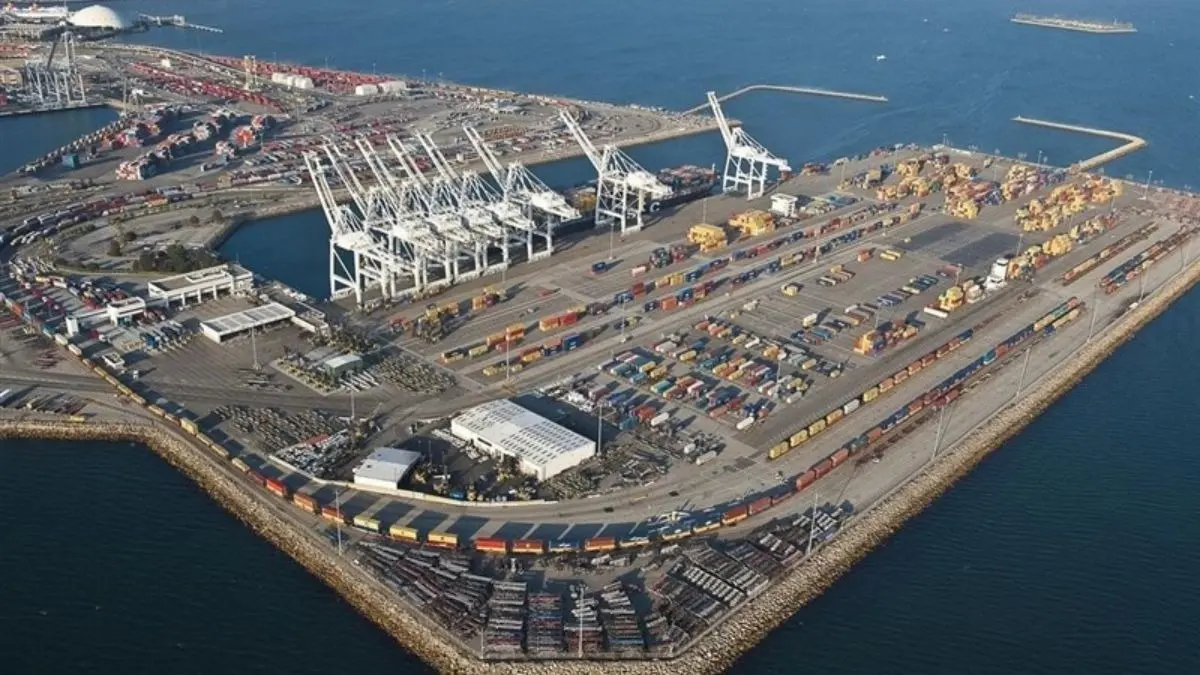
New Delhi: India’s foreign policy and trade dynamics are facing renewed turbulence following Washington’s revocation and subsequent six-month reinstatement of the sanctions waiver for participation in Iran’s Chabahar port project. This development, occurring alongside sharp new US sanctions on Russian oil firms, compels a reassessment of India’s regional strategies, energy security, and trade routes at a time of global realignment and market uncertainty.
Chabahar Port Waiver: Strategic Stakes and Diplomatic Context
India’s investment in Iran’s Chabahar port is anchored in its imperative to secure a gateway for Afghanistan and Central Asia that bypasses Pakistan, thereby reducing reliance on transit routes susceptible to regional instability. Chabahar is also positioned as a lynchpin within the International North-South Transport Corridor (INSTC), linking India to Russia and Europe, and helping India access new markets for wheat, pharmaceuticals, textiles, and engineering goods. The project involves operational responsibility for the Shahid Beheshti terminal and a $120 million commitment by Indian Ports Global Limited plus a further pledge of $250 million for infrastructure.
Until September, the existing US sanctions waiver enabled India and other partners to operate with a degree of impunity, facilitating the flow of goods critical for Afghanistan’s reconstruction and regional stability. President Trump’s recent rollback of this waiver, as part of a “maximum pressure policy” to isolate Iran, unsettled these carefully calibrated plans. India’s Ministry of External Affairs (MEA) confirmed receipt of a six-month waiver, but cautioned that the full implications are under study amid ongoing trade negotiations with the US and heightened scrutiny of Russian and Iranian partners.
Economic Impact: Trade Disruption and Leverage Loss
Lost Opportunity
Chabahar’s strategic value extends beyond geopolitics. In practical terms, it offers a gateway for Indian goods into landlocked Afghanistan and Central Asian republics, where markets for pharmaceuticals, textiles, and food products are expanding. Prior to the risk of sanctions, Chabahar had facilitated the delivery of wheat, medicines, and essential goods. The port’s potential as an export and trans-shipment hub remains substantial, with estimates suggesting opportunities worth billions in annual trade. India’s $86.5 billion in exports to its largest trading partners run the risk of disruption due to parallel trade dissonances, such as record-high 50% duties imposed since August on labor-intensive exports.
Investment and Risk
The revocation of the waiver means that Indian entities operating at Chabahar face exposure to US penalties, putting capital investment and future expansion at risk. The $370 million outlay (including pledged credits) is now imperiled, and companies may hesitate to deepen engagement given persistent regulatory uncertainty. Sanctions also complicate dollar-based settlements, insurance, and credit flows, increasing the operational costs and risk profile for Indian firms.
Energy Security: Russian Oil Sanctions and the Calculus of Alternatives
Simultaneously, US sanctions targeting Russian oil majors—Rosneft and Lukoil, responsible for more than 5 million barrels per day (mbd) in crude and condensate production—have destabilized global markets and pose acute challenges for Indian refiners. India, together with China, accounts for approximately 2.7–2.8 mbd of Russian seaborne crude imports. These new restrictions, coupled with ongoing Ukrainian drone attacks on Russian refineries reducing output from 5.4–5.6 mbd last year to a forecasted 5.2 mbd for November–December, stand to disrupt refinery operations and inventories.
While Indian companies have typically been cautious about breaching US sanctions, many continue purchases; Kpler data notes ongoing trading by Indian refiners even as their Chinese counterparts have paused shipments. The MEA’s position underscores a commitment to “secure affordable energy from diverse sources” signaling that supply-side constraints may force India to seek bigger volumes from the Middle East (Basrah Medium, Abu Dhabi’s Upper Zakum, Qatar’s Al-Shaheen) amid favorable Brent-Dubai pricing and competitive Atlantic Basin cargoes.
Diplomatic Leverage and Regional Strategy
The Chabahar waiver’s timing underlines major diplomatic dilemmas. With Beijing deepening ties to Pakistan’s China-operated Gwadar port, just 140 km from Chabahar, India perceives US policy shifts as undermining its counterweight ambitions in the Arabian Sea. The temporary reprieve of a six-month window to continue operations was limited solace and increased India’s incentive to diversify not only its energy sources but also diplomatic channels.
India’s decision matrix now hinges on:
- The risk and cost of continued involvement at Chabahar vis-à-vis US penalties
- Alternatives for critical Afghan aid and Central Asia trade links
- Retooling of refinery operations to absorb unpredictable Russian supply
- Enhanced demand for Middle Eastern crude as a stopgap if price and quality remain competitive
Statistical Perspective: Prospective Benefits and Losses
- Trade Potential: Chabahar’s full operationalization could enable India to raise regional exports by $2–3 billion annually, with Central Asia and Afghanistan representing untapped markets for pharmaceuticals, machinery, and food products.
- Energy Security: Russian crude comprises nearly 20–25% of India’s overall oil imports this year. Any significant disruption will necessitate logistical recalibration, increased dependence on the Gulf, and potentially higher import costs if Brent or Middle Eastern spreads widen.
- Investment Risk: The $370 million Chabahar stake faces uncertainty, raising questions about credit flows, insurance premiums, and future expansion.
- Geopolitical Leverage: US waiver revocation shrinks India’s diplomatic wiggle room, forcing sharper choices in balancing ties with Washington, Tehran, and Moscow, while defending its own “energy sovereignty” and regional connectivity ambitions.
Conclusion: India’s Calculus in a New Era of Sanctions and Uncertainty
India’s receipt of a six-month waiver to operate at Chabahar offers only “breathing space” as it faces an intricate web of sanctions affecting both its port strategy and energy security. The potential long-term benefits of trading leverage, regional influence, and supply diversification remain substantial, but these must be weighed against pronounced risks: financing constraints, legal exposure, and unanticipated market shocks. The MEA’s stated approach of monitoring evolving dynamics reflects both caution and the imperative to secure energy needs for 1.4 billion people.
Going forward, India’s strategy will likely center on maximizing short-term trade and energy opportunities via Chabahar while fast-tracking alternative routes and partnerships to hedge against Western penalties. A judicious recalibration of risk, supply chains, and diplomatic priorities is needed if India is to preserve its regional ambitions and insulate itself from a volatile sanctions regime shaping the global order.
Get Current Updates on India News, Entertainment News, Cricket News along with Latest News and Web Stories from India and around the world.
Published October 30th 2025, 23:03 IST