Add Republic As Your Trusted Source




Add Republic As Your Trusted Source
Advertisement
Updated September 25th 2025, 14:39 IST
India’s Cheetah Cubs Beat Global Survival Odds: 61% Survival Rate Boosts Conservation Success
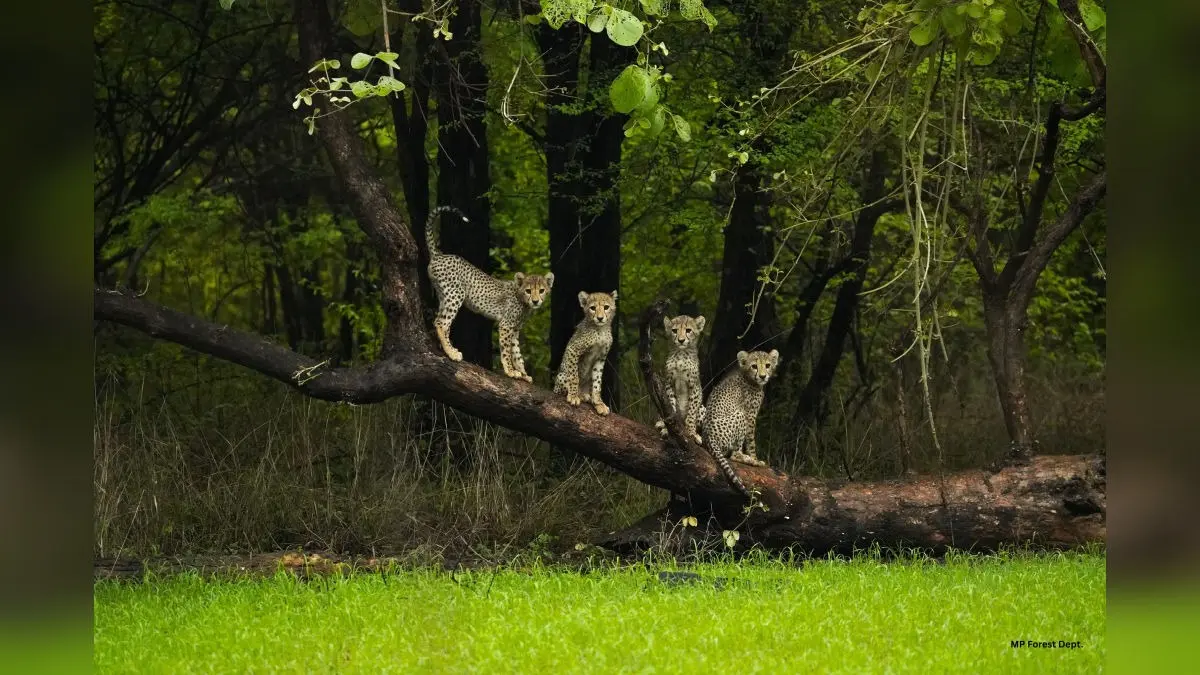
Across India, there are now 27 cheetahs, including 16 born in the country. Among them, Mukhi the first Indian born cheetah is now a healthy 30-month-old.


Cheetahs, the fastest land animals on Earth, disappeared from India more than seven decades ago. Once roaming widely across the country, they were declared extinct in 1952, becoming the only large carnivore lost from India. But the dream of bringing them back has never faded, with renewed focus and commitment beginning in 2014.
From Legal Breakthrough to Global First
A turning point came in 2020, when the Supreme Court allowed cheetahs from Africa to be introduced into India’s wild. Action Plan for Introduction of Cheetah in India, finalized in December 2021 by the Wildlife Institute of India (WII) under the Ministry of Environment, Forest and Climate Change paved the way for what would become a historic achievement: the world’s first intercontinental translocation of a large wild carnivore, with cheetahs flown from South Africa and Namibia to Indian soil. This landmark project placed India at the forefront of global wildlife conservation.

The Main Habitats: Kuno, Gandhisagar, and Beyond
The heart of the project is Kuno National Park in Madhya Pradesh, covering over 1,700 square kilometers. Today, it is home to 15 free ranging cheetahs 2 adult males, 3 adult females, and 10 sub adults.
Across India, there are now 27 cheetahs, including 16 born in the country. Among them, Mukhi the first Indian born cheetah is now a healthy two and a half year old, symbolizing the success of the reintroduction project. Each cheetah is fitted with a radio collar, allowing teams to track and monitor them constantly.
The expansion is already underway. On September 17, 2025, three cheetahs were introduced into Gandhisagar Wildlife Sanctuary. Alongside Kuno and Gandhisagar, two more sites are being prepared: Banni Grasslands in Gujarat and Nauradehi Wildlife Sanctuary in Madhya Pradesh. With Gujarat joining the map, cheetah reintroduction is spreading across new landscapes, supporting both population growth and ecological balance.
Science, Survival, and Monitoring
Reintroduction isn’t just about numbers it’s about survival. Globally, cheetah cub survival hovers around 40%, but in India, the rate is a remarkable 61%. For every five cubs born, three survive far higher than the global average. Experts credit India’s rich grasslands and abundant prey, which allow cheetahs to hunt efficiently and thrive.
On the ground, each cheetah is monitored by three dedicated personnel, aided by radio collar tracking. There are seven veterinarians from the state government, central government, and the Wildlife Institute of India, ensuring round the clock health monitoring.
Conservation Meets Community
What makes this project unique is the involvement of local communities. Over 450 volunteers, called 'Cheetah Mitras,' help spread awareness and promote coexistence. Anubhuti camps, which have engaged 2,500 students and 500 teachers, are educating the next generation about the importance of wildlife conservation.
Cheetah sightings in tourist areas are already being reported, showing their adaptability and hinting at the potential to boost eco tourism. This project is not just a scientific milestone it’s a people’s movement, where conservation meets participation.
India’s Leadership in Big Cat Conservation
India’s confidence in reintroducing cheetahs builds on its unmatched success in tiger conservation. The country has extensive experience managing large carnivores and their habitats, and Project Cheetah reinforces India’s position as a global pioneer in wildlife protection.
The Road Ahead
The vision is ambitious but clear: introduce 10–12 cheetahs every year, strengthen existing sites like Kuno and Gandhisagar, and populate new areas such as Gujarat’s Banni Grasslands. Discussions are also underway with Kenya, Botswana, and Namibia for sourcing future batches of cheetahs.
At its heart, the goal is simple yet profound: to ensure cheetahs not only survive, but thrive and reproduce across Indian landscapes. The higher than average survival rate of cubs offers a hopeful sign for the future.
A New Chapter in Gujarat
With Gujarat poised to host the next batch, India’s cheetah story is set to expand westward. The introduction of cheetahs into the Banni Grasslands will mark the first time the species returns to Gujarat in modern history, adding another feather in the state’s conservation cap.
This project is more than bringing back a species it’s about correcting an ecological loss, restoring balance, and giving future generations a chance to see cheetahs running across Indian grasslands, as they did centuries ago.
By December 2025, Gujarat will officially join this journey, expanding cheetah territory and reinforcing India’s role as a global leader in wildlife conservation.
Published September 25th 2025, 14:39 IST