Add Republic As Your Trusted Source




Add Republic As Your Trusted Source
Advertisement
Updated October 1st 2024, 13:33 IST
Solar Eclipse 2024: When And Where To Watch The Annular Solar Eclipse
This year, the second solar eclipse will occur on Wednesday, October 2, and it will be an annular solar eclipse.


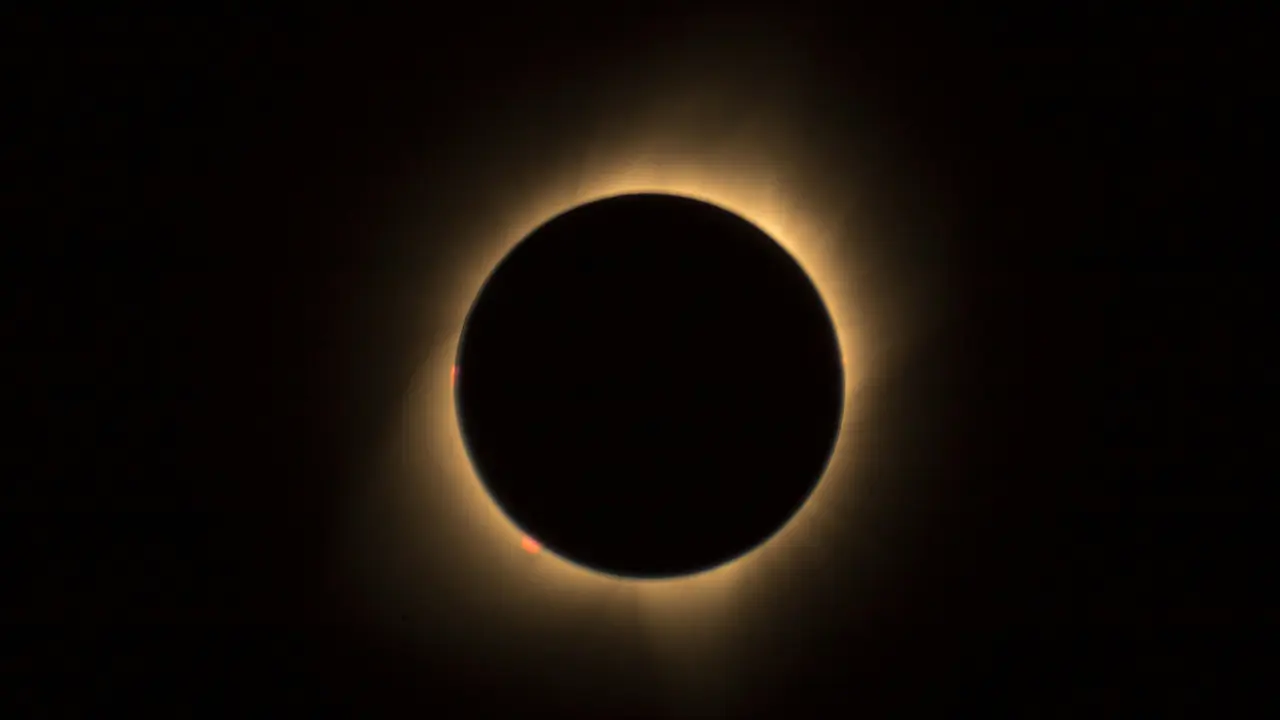
In layman's terms, a solar eclipse occurs when the moon passes between the Earth and the Sun. The difference between a total solar eclipse and an annular solar eclipse is that during a total solar eclipse, the moon completely covers the sun and during an annular solar eclipse the moon only partially blocks the Sun, casting shadows on the Earth, resulting in a ring of fire.
When is the expected date to watch the annular solar eclipse?
This year, the second solar eclipse will occur on Wednesday, October 2, and it will be an annular solar eclipse. According to Drik Panchang, the duration of this annular solar eclipse will last for approximately 7 minutes and 25 seconds.

Which countries will get to witness the annular solar eclipse?
“The annular solar eclipse will be visible in the Chile and Argentina regions of the South American continent. The partial solar eclipse will be visible in some southern parts of North America, most of South America, the Pacific Ocean, the South Atlantic Ocean, and Antarctica,” states Drik Panchang.
“This eclipse will not be visible from India, Pakistan , Sri Lanka, Nepal, Afghanistan, Mauritius, the United Arab Emirates, and other Asian countries. Additionally, this eclipse will not be visible from countries in Europe, Africa, the northern parts of North America, and the Australian continent.”
What time will the annular solar eclipse be visible in India?
According to Indian Standard Time (IST), the second solar eclipse of 2024 is expected to be visible starting from 9:13 pm on October 2 and ending at 3:17 am on October 3.
Why India will not get to witness the iconic solar eclipse?
Unfortunately, as per the predicted time in IST, India will not be able to witness the annular solar eclipse since it will occur during nighttime.
Published October 1st 2024, 13:33 IST