Add Republic As Your Trusted Source




Add Republic As Your Trusted Source
Advertisement
Updated March 15th 2026, 22:53 IST
Is Your Gud Or Jaggery Pure Or Adulterated? Find Out Using FSSAI's Test
In Indian households, gud is preferred as a sweetening agent over white sugar. However, adulterated gud being sold in the market can cause major health concerns.


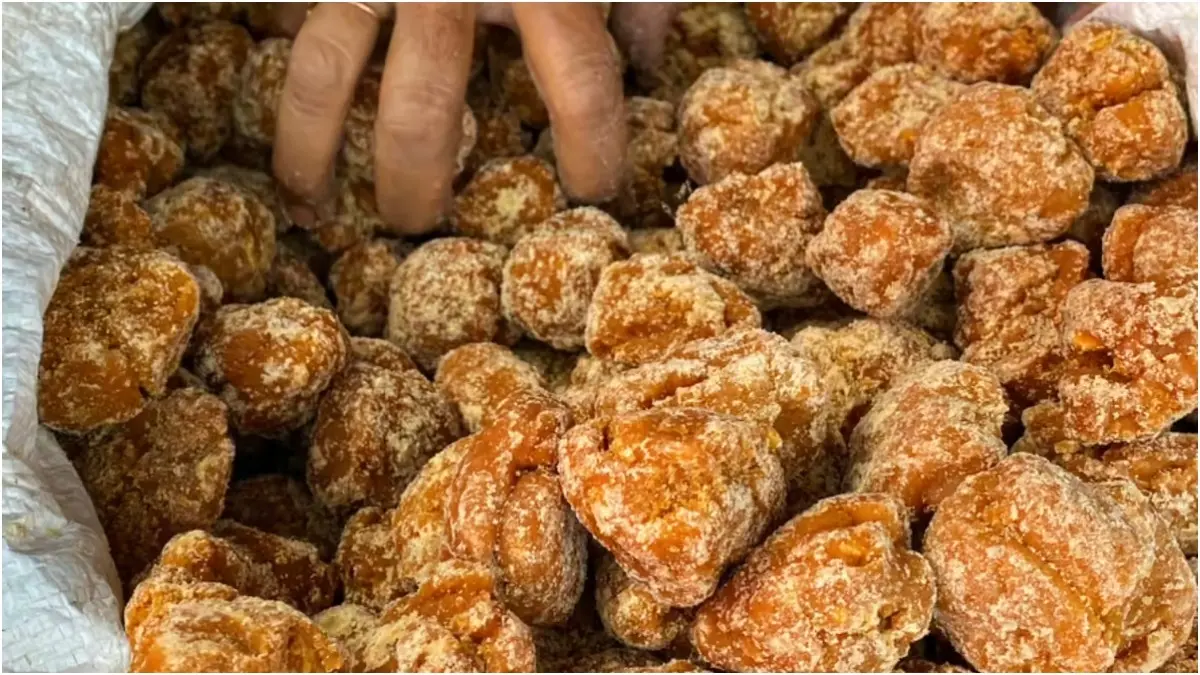
In most Indian households, gud or jaggery it is used as a substitute for sugar. Consuming jaggery is also considered to be highly beneficial for one's health. However, food experts warn that the jaggery sold in markets may sometimes contain lime powder, chemicals or other impurities. To assist consumers in identifying safe products, the Food Safety and Standards Authority of India (FSSAI) has outlined a simple method to check the purity of jaggery, which can be easily performed at home. This method is extremely simple and requires nothing more than water.

How to test purity of jaggery?
– Take a small piece of jaggery and place it in a glass of clean water. Leave it undisturbed for a few minutes and observe what happens.
– If the jaggery dissolves completely in the water without leaving any residue, it is pure. If particles settle at the bottom of the glass, it indicates the presence of adulterants such as chalk powder or other impurities.
Identify pure jaggery by checking its colour
The colour of jaggery serves as the primary indicator of its quality. Typically, pure jaggery ranges in colour from golden-brown to dark brown. Excessively bright yellow jaggery may be adulterated.
Texture: Pure jaggery is typically solid, yet slightly soft when broken.
Taste: It should taste sweet, without any harsh chemical flavor.
Harmful effects of consuming adulterated jaggery
Jaggery is produced by boiling sugarcane juice until it thickens and solidifies. Traditionally, it is prepared without the use of chemicals. However, to enhance its colour or to increase its weight, some vendors add chalk powder or other substances to it. These impurities can compromise both the taste and safety of the product. The regular consumption of adulterated food products can lead to various health issues.
Published March 15th 2026, 22:53 IST