Add Republic As Your Trusted Source




Add Republic As Your Trusted Source
Advertisement
Updated September 6th 2025, 17:59 IST
How Trump’s Tariffs Shattered Two Decades of Indo-US Partnership: A Tale of Hypocrisy and Strategic Myopia
The Indo-US relationship, painstakingly constructed over more than two decades through diplomatic grit and strategic vision, has been one of the most significant geopolitical success stories of the 21st century.


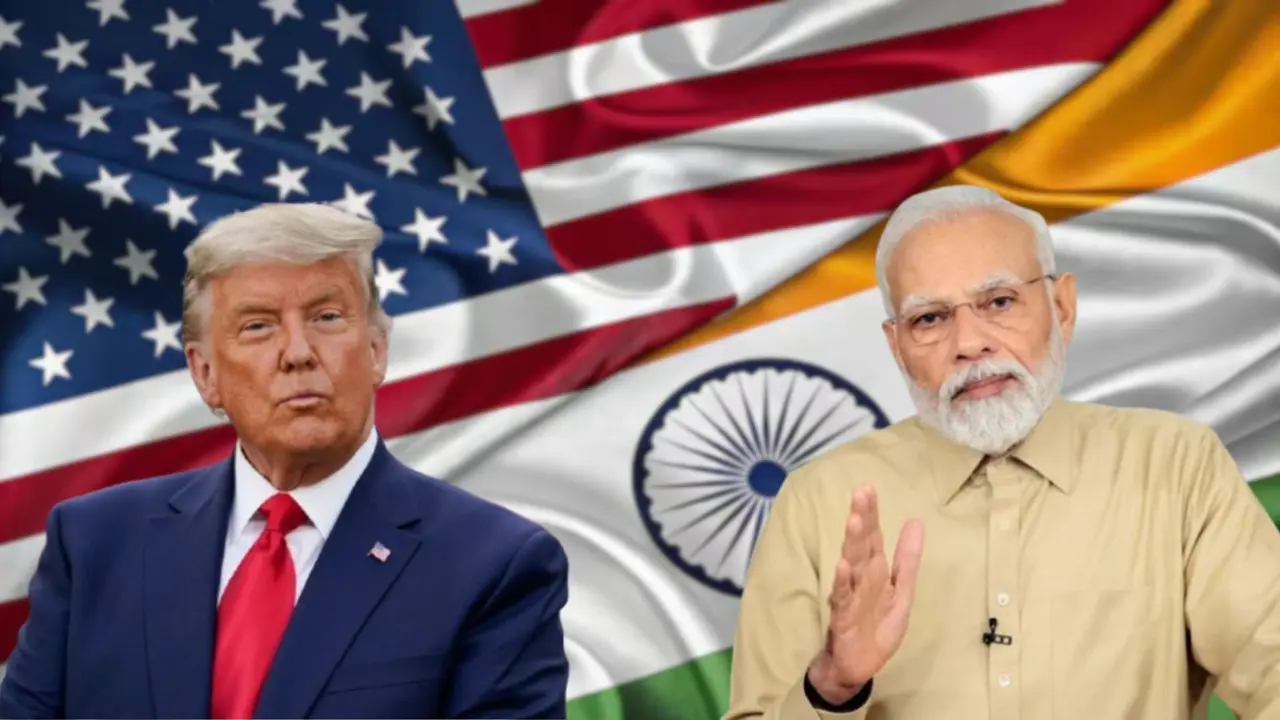
The Indo-US relationship, painstakingly constructed over more than two decades through diplomatic grit and strategic vision, has been one of the most significant geopolitical success stories of the 21st century. From the nadir of nuclear sanctions in 1998 to the historic civil nuclear deal of 2008, this partnership has weathered numerous storms to emerge as a critical strategic counterweight to Chinese expansionism in the Indo-Pacific.
Defense cooperation soared from near-zero to over $20 billion in annual trade, while joint military exercises became routine. Over 200,000 Indian students in the United States and a thriving diaspora of nearly 5.1 million Indian Americans served as living bridges between the world's two largest democracies. This partnership wasn't merely symbolic, it was underpinned by concrete economic ties, with bilateral trade reaching $129 billion in 2024.
Today, this formidable achievement stands threatened by the capricious policies of a single administration in Washington. The imposition of crippling tariffs of up to 50% on Indian goods, punitive measures that far exceed those applied to allies like the European Union (15%) or Vietnam (20%), represents not merely an economic blow but a profound diplomatic betrayal.
This reckless move, coupled with Washington's continued purchase of Russian uranium and its overt courting of Pakistan despite its history of sponsoring terrorism, exposes a staggering hypocrisy that threatens to unravel one of Asia's most critical strategic partnerships.
Disproportionate Economic Warfare
The European Union enjoys tariffs averaging around 15%, while Vietnam faces approximately 20%. This discriminatory treatment appears particularly punitive when we consider that India's average tariff on U.S. imports is approximately 7.5%, hardly the protectionist barrier the Trump administration portrays.
The economic impact of these measures cannot be overstated. The tariffs threaten nearly 55% of India's $87 billion in merchandise exports to the U.S., affecting industries ranging from textiles and garments to gems, jewellery, footwear, sporting goods, furniture, and chemicals 9. Rajeswari Sengupta, an economics professor at Mumbai's Indira Gandhi Institute of Development Research, notes that the tariffs will force Indian exporters to lose competitive edge against competitors from Vietnam, Bangladesh, and China 9. The human cost may be even more devastating: according to estimates from the Anand Rathi Group, up to 2 million jobs are at risk in the near term, many of them in Prime Minister Narendra Modi's home state of Gujarat.
A Question of US Hypocrisy
This moralising stance collapses under the slightest scrutiny. While India's purchase of Russian oil has indeed increased dramatically, from $2.31 billion in 2021 to $52.2 billion in 2024, the US itself continues to maintain significant trade relationships with Russia 2. Most strikingly, the U.S. imported enriched uranium and plutonium from Russia worth around $624 million in 2024, down only slightly from $646 million in 2021 2. Russia remains America's largest foreign supplier of enriched uranium, providing 27% of the uranium enrichment services purchased by U.S. owners and operators in 2023.
This hypocrisy extends beyond uranium. The U.S. imported Russian fertilizers worth approximately $1.27 billion in 2024 (up from $1.14 billion in 2021) and palladium worth $878 million (down from $1.59 billion in 2021) 2. Meanwhile, Europe continues to purchase Russian liquefied natural gas (LNG), with about 17% of Europe's gas still coming from Russia via the TurkStream pipeline and LNG shipments 2. The EU also remains dependent on Russian fertilizers, with Russia maintaining its position as the largest exporter to the 27-nation bloc with a 25.62% share in the first quarter of 2025.
Washington’s Pakistan Calculus
Even as the Trump administration punishes India for its energy choices, it has embarked on a remarkable rapprochement with Pakistan, a country with a long and documented history of sponsoring cross-border terrorism. In September 2022, Washington approved a $450 mn sustainment package for Pakistan’s F‑16 fleet, framing it as necessary for counter‑terrorism readiness, this was the first major security step after a prior aid suspension. Meanwhile, Pakistan was removed from FATF’s “grey list” in October 2022 after completing a 34‑point action plan, though global watchdogs continue to monitor implementation.
For New Delhi, which has long insisted that talks and cross‑border terrorism cannot go hand in hand, such moves are read against a history of attacks traced to Pakistan‑based groups, even as US, India strategic convergence deepened in the Indo‑Pacific. The two‑decade arc of India, US alignment, however, has been bipartisan in Washington, and resilient to swings, until this year’s tariff lurch.
The Trump administration's tariff offensive against India represents more than merely an economic dispute, it constitutes a fundamental reassessment of Washington's approach to one of its most important strategic partnerships in Asia. The imposition of discriminatory tariffs, coupled with hypocritical criticism of India's energy imports and a bewildering embrace of Pakistan, suggests a profound failure to understand India's strategic importance or the delicate balance of power in South Asia.
This approach ignores the complex realities of global trade and energy security. While lecturing India on its purchase of Russian oil, the United States continues to buy billions of dollars worth of Russian uranium, fertilizers, and palladium. While punishing India with punitive tariffs, it rewards Pakistan with increased military cooperation and investment, despite Islamabad's long history of sponsoring cross-border terrorism.
Published September 6th 2025, 17:59 IST