Add Republic As Your Trusted Source




Add Republic As Your Trusted Source
Advertisement
Updated April 3rd 2026, 16:36 IST
'Goodnight Crew, Goodnight Moon': Busy Day Aboard Orion, NASA Artemis II Astronauts Sign Off
Artemis II LIVE updates: The translunar injection burn not only sets the Artemis II astronauts on the path to the Moon, it also puts the crew in a free return trajectory, which will allow them to use Moon's gravity to return to Earth.


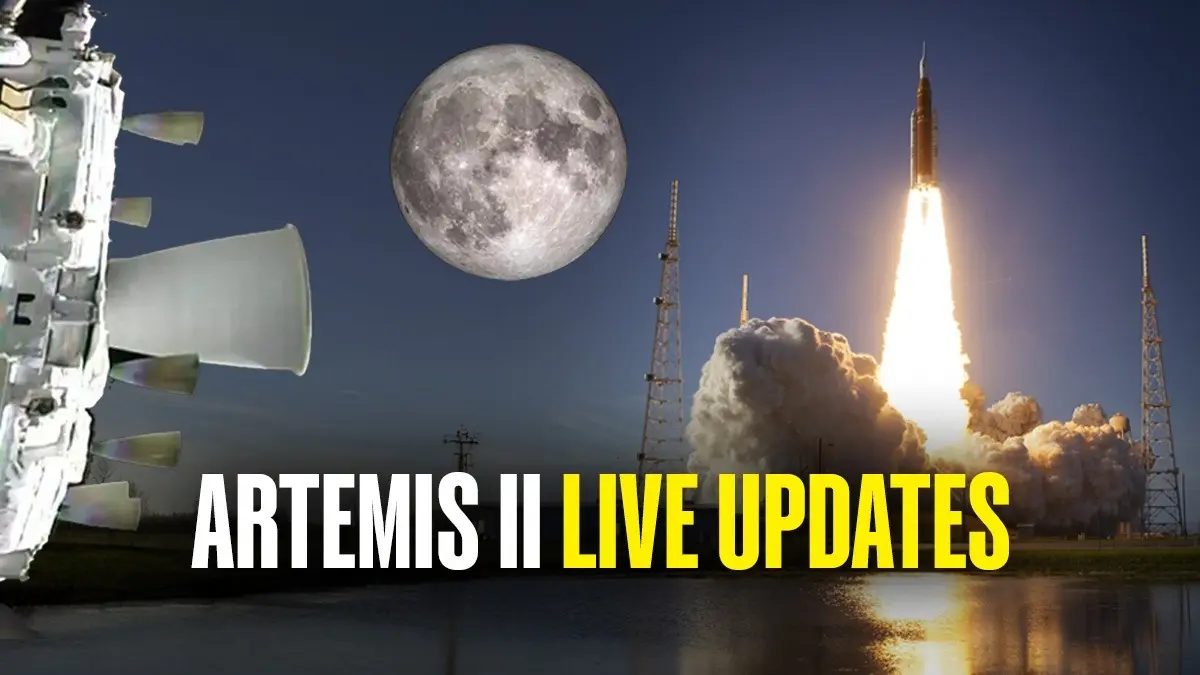
NASA's Artemis II mission, which launched on Wednesday, is humanity’s first lunar voyage in more than half a century and the thrilling leadoff in NASA’s push toward a landing in two years. The mission is expected to last about 10 days, sending four astronauts on a high-speed journey around the moon and back in the first crewed lunar mission since the Apollo era.
Artemis II is designed to pave the way for future missions aimed at returning astronauts to the lunar surface later this decade. Carrying three Americans and one Canadian, the 32-story rocket rose from NASA’s Kennedy Space Center where tens of thousands gathered to witness the dawn of this new era. It is NASA’s biggest step yet toward establishing a permanent lunar presence.
Five minutes into the flight, Commander Reid Wiseman saw the team’s target: “We have a beautiful moonrise, we’re headed right at it,” he said from the capsule. On board with him are pilot Victor Glover, Christina Koch and Canada's Jeremy Hansen. It was the most diverse lunar crew ever with the first woman, person of color and non-U. S. citizen riding in NASA’s new Orion capsule.
The astronauts will stick close to home for the first 25 hours of their 10-day test flight, checking out the capsule in orbit around Earth before firing the main engine that will propel them to the moon.
April 3rd 2026, 13:52 IST
'Goodnight Crew. Goodnight Moon': Astronauts Signs off Second Day of the Artemis II Mission
Artemis II LIVE: NASA posted on X that the second day of the Artemis II mission was coming to an end as the four astronauts had a very busy day working on the spacecraft, and now they are getting ready to go to sleep.
April 3rd 2026, 13:24 IST
What’s on Tap For 10-Day Test Flight?

April 3rd 2026, 12:57 IST
Track NASA’s Artemis II Mission in Real Time
Artemis II LIVE: NASA has invited the public to track the Artemis II mission in real time using the Artemis Real-time Orbit Website (AROW). As four astronauts venture around the Moon inside the Orion spacecraft, AROW allows users to visualize data collected by Orion's sensors and sent to the Mission Control Center at NASA's Johnson Space Center in Houston.
The real-time data will be available starting about one minute after liftoff until Orion's atmospheric reentry to Earth at the end of the mission.
Online, users can see where Orion and the crew are in relation to Earth and the Moon, follow Orion's path, and view key mission milestones, including information about Apollo program landing sites.
April 3rd 2026, 12:50 IST
'Your Hopes Carry Us Now': Jeremy Hansen on Artemis II Journey to Moon
Artemis II LIVE: Canadian astronaut Jeremy Hansen, the first non-American on a lunar mission, said he and his crewmates were glued to Orion's windows as Earth shrank behind them, taking in "phenomenal" views, their faces pressed so tight they had to wipe the glass clean.
Further, he said, “Humanity has once again shown what we are capable of, and it’s your hopes for the future that carry us now on this journey around the moon.”
April 3rd 2026, 12:42 IST
Astronauts Use GoPro and IPhone to Document Trip
Artemis II LIVE: The four NASA Artemis II astronauts are using GoPro, iPhone, and professional Nikon cameras to document their mission from inside the Orion capsule. The decision to include iPhones came from NASA Administrator Jared Isaacman, a billionaire astronaut who used them on his own SpaceX flights. While no images have been released yet, NASA plans to share them later, including an anticipated "Earthrise" shot similar to the iconic 1968 Apollo 8 photo.
April 3rd 2026, 11:33 IST
'I'm Proud to be a Space Plumber': Christina Koch
Artemis II LIVE: NASA astronaut Christina Koch, the first woman set to travel to the Moon, has proudly embraced the unexpected title of “space plumber".
April 3rd 2026, 09:34 IST
WATCH The Exact Moment Artemis II Astronauts Left Earth Orbit
Artemis II LIVE: NASA’s Artemis II astronauts fired their engines and blazed toward the moon Thursday night, breaking free of the chains that have trapped humanity in shallow laps around Earth in the decades since Apollo.
The so-called translunar ignition came 25 hours after liftoff, putting the three Americans and a Canadian on course for a lunar fly-around early next week. Their Orion capsule bolted out of orbit around Earth right on cue and chased after the moon to nearly 250,000 miles (400,000 kilometers) away.
“Ladies and gentlemen, I am so, so excited to be able to tell you that for the first time since 1972 during Apollo 17, human beings have left Earth orbit,” NASA’s Lori Glaze announced at a news conference.
The engine firing was flawless, she noted.
Canadian astronaut Jeremy Hansen said he and his crewmates were glued to the capsule's windows as they left Earth in the rearview mirror, taking in the “phenomenal” views. Their faces were pressed so tightly against the windows that they had to wipe them clean.
April 3rd 2026, 09:32 IST
Historic First Visuals Of Artemis II Astronauts From Inside Orion
In a historic moment, the first LIVE visuals from inside the Orion spacecraft have offered a rare glimpse into the lives of astronauts aboard NASA’s Artemis II mission. In a chat with the NASA mission control centre, the astronauts Commander Reid Wiseman, Pilot Victor Glover, and Mission Specialist Christina Koch, and CSA (Canadian Space Agency) astronaut Mission Specialist Jeremy Hansen shared their reactions just after leaving Earth’s orbit and setting course for the Moon.
WATCH: The LIVE broadcast captured the crew floating inside the capsule, speaking to mission control and describing the surreal experience of the historic launch and witnessing Earth slowly slip away as they began their lunar flyby journey.
April 3rd 2026, 08:10 IST
‘Artemis II Engine Firing Was Flawless’: NASA
Artemis II LIVE: Lori Glaze, Deputy Associate Administrator of NASA said - "So ladies and gentlemen, I am so, so excited to be able to tell you that for the first time since 1972, during Apollo 17, human beings have left Earth orbit. With Artemis II’s successful 5 minute and 52 second translunar injection burn this evening, our four crew members, NASA astronauts Reid Wiseman, Victor Glover, Christina Koch and Canadian astronaut Jeremy Hansen are now on their trajectory toward the moon.”
“The burn was executed by our flight operations team here in Houston and it was flawless. The burn was the last major firing of this mission. From this point forward, the laws of orbital mechanics are going to carry our crew to the moon, around the far side and back to earth. Our crew is healthy and our spacecraft is performing really well. After we've had a series of checkouts since launch and again, everything really performing pretty well, and we are on the path that we designed for this mission. But just a reminder again, you hear us keep saying it over and over again, this is still a test flight. We are going - we are getting and we're going to continue to get lots of new data every day, important information as we continue learning how we're going to operate this Orion Spacecraft in the actual space environment. And I'll tell you, we're already learning a lot as we go. We've encountered several things along the way. We're not really tracking anything right now that's of concern, but anything that we've encountered since we've - since we've launched, was brought to our mission management team today and discussed. And the satisfactory path forward on every case and a unanimous decision to proceed forward with the go for the translunar injection burn," Glaze said.
April 3rd 2026, 08:05 IST
‘We Are Ready To Go’
Artemis II LIVE: NASA’s Artemis II astronauts fired their engines and blazed toward the moon Thursday night, breaking free of the chains that have trapped humanity in shallow laps around Earth in the decades since Apollo.
The so-called translunar ignition came 25 hours after liftoff, putting the three Americans and a Canadian on course for a lunar fly-around early next week. Their Orion capsule bolted out of orbit around Earth right on cue and chased after the moon to nearly 250,000 miles (400,000 kilometers) away.
“Ladies and gentlemen, I am so, so excited to be able to tell you that for the first time since 1972 during Apollo 17, human beings have left Earth orbit,” NASA’s Lori Glaze announced at a news conference.
To set the mood for the day’s main event, Mission Control woke up the crew with John Legend’s “Green Light” featuring Andre 3000 and a medley of NASA teams cheering them. “We are ready to go,” Glover said.
April 3rd 2026, 07:21 IST
Next Stop: Lunar Flyby
Artemis II LIVE: In a critical milestone for the mission, the Orion spacecraft successfully fired its service module's main engine for a six-minute burn. Generating approximately 6,000 pounds of thrust, this powerful maneuver provided the necessary momentum to propel the Artemis II crew out of Earth's orbit and onto their historic trajectory toward the Moon.
April 3rd 2026, 07:11 IST
'Liftoff Was Just The Beginning'
Artemis II LIVE: NASA launched Artemis II on April 2. What's next? Watch here -
April 3rd 2026, 07:09 IST
Nasdaq Celebrates Successful Artemis II Launch
Nasdaq, the second larges stock exchange of US, celebrated the successful launch of NASA's Artemis II mission, marking humanity’s return to the Moon after more than 50 years.
April 3rd 2026, 07:08 IST
Nominal Translunar Injection Burn Complete. Artemis II En Route Moon
Artemis II LIVE: The mission management team polled ‘Go’ for the translunar injection burn to send the crew in the Orion spacecraft toward the Moon and send humans around Earth’s closest celestial neighbor for the first time since Apollo 17 in 1972. The spacecraft ignited its main engine on the service module for five minutes and 49 seconds beginning at 7:49 p.m. EDT. Orion’s main engine provides up to 6,000 pounds of thrust, enough to accelerate a car from 0 to 60 mph in about 2.7 seconds.
April 3rd 2026, 06:56 IST
WATCH NASA Briefing Answering Artemis II FAOs
Artemis II LIVE: NASA answers media questions and provide updates on our Artemis II mission around the Moon. Watch here -
April 3rd 2026, 06:55 IST
How Will Artemis II Ensure 'Free Return' Using Moon's Gravity
Artemis II LIVE: The Translunar Injection (TLI) burn does more than just kickstart the journey to deep space; it carefully positions the spacecraft onto a free return trajectory.
By entering this specific path, the mission uses the Moon's gravity as a natural slingshot. If the crew encounters any issues, this orbital ‘U-turn’ ensures the spacecraft is pulled automatically back toward Earth without needing a secondary engine burn to find its way home.
April 3rd 2026, 06:52 IST
'Not A Straight Shot To Far Side Of The Moon!'
Artemis II LIVE: The journey to the far side of the Moon is anything but a straight line. Over a 10-day mission, the Artemis II crew will execute a complex ‘free-return’ trajectory designed to ensure a safe journey home using the Moon's own gravity.
April 2nd 2026, 19:58 IST
Preigee Burn is over
According to NASA, the perigee raise burn for the Artemis-II flight was complete at about 7 PM IST. It marks the successful completion of another planned orbital adjustment in the early hours of the Artemis II mission. “The spacecraft ignited its service module’s main engine for 43 seconds, raising the lowest point of its orbit and refining the trajectory as it continues to circle Earth,” said NASA.
April 2nd 2026, 17:50 IST
Artemis 10- day plan: Day 3 schedule
Artemis II LIVE: On flight day 3 of Artemis II, astronaut Jeremy Hansen prepares for the first outbound trajectory correction burn to keep the Orion spacecraft on course to the Moon.
The crew also conducts safety and medical demonstrations, including CPR in microgravity and equipment checks, while Christina Koch tests emergency communications with the Deep Space Network. The day concludes with a full crew rehearsal for upcoming lunar observation activities.
April 2nd 2026, 16:39 IST
What we know about the four astronauts on Artemis II?
The four astronauts on Artemis II are:
- The mission commander, Reid Wiseman, is a former test pilot and pilot in the United States Navy. In 2009, he joined NASA as an astronaut, and in 2014, he spent 165 days aboard the International Space Station (ISS).
- Victor Glover is the spacecraft's pilot. He piloted SpaceX Crew-1 and spent November 2020–May 2021 on the International Space Station. He holds three master's degrees and will be the first Black astronaut to travel to the moon.
- Christina Koch, a mission specialist, became an astronaut in 2013. With a duration of 328 days, she holds the record for the longest female spaceflight. In addition, she will be the first female lunar traveler.
- The other mission specialist is Jeremy Hansen. He'll be the first Canadian to travel to the moon. As part of his NASA aquanaut training, he has also lived underwater for seven days.
April 2nd 2026, 15:56 IST
Artemis 10- day plan: Day 2 schedule
Artemis II LIVE: On Artemis II, astronauts Reid Wiseman and Victor Glover begin their day by testing Orion’s exercise equipment, while Christina Koch prepares for the mission’s key translunar injection (TLI) burn that will send the Orion spacecraft toward the Moon on a free-return trajectory.
After the burn, the crew transitions to lighter activities, including adapting to space conditions and taking part in space-to-ground communications, marking a shift into the next phase of their journey.
April 2nd 2026, 13:22 IST
What will Artemis II do?
Artemis II LIVE: According to NASA, Artemis II builds on the success of the uncrewed Artemis I in 2022 and will demonstrate a broad range of capabilities needed on deep space missions. The Artemis II test flight will be NASA’s first mission with crew aboard the SLS (Space Launch System) rocket and Orion spacecraft.
April 2nd 2026, 13:09 IST
Artemis II crew, mission control troubleshoot Orion spacecraft's recurring toilet issue
Artemis II LIVE: The crew of NASA's historic Artemis II mission, with support from mission control, successfully restored the Orion spacecraft's toilet system after it experienced a recurring issue following Wednesday’s launch (US local time) from the Kennedy Space Centre in Florida.
"Ahead of the apogee raise burn on April 1, the Artemis II crew reported a blinking fault light and mission control teams successfully assessed the data and worked with the crew to troubleshoot and resolve the issue," the US space agency said in a statement.
April 2nd 2026, 12:43 IST
Artemis II completes key proximity operations test, next burn planned
Artemis II LIVE: NASA’s Artemis II crew has completed a critical proximity operations demonstration, marking an early milestone in the mission, according to a NASA blog update.
The test involved manually flying the Orion spacecraft near its upper stage to evaluate handling and navigation in close-range conditions.
With the manoeuvre complete, the mission is now preparing for the next major step, which is a perigee raise burn that will adjust Orion’s orbit and set it on course for its journey toward the Moon. The milestone is part of a series of system checks designed to validate spacecraft performance during the 10-day lunar flyby.
April 2nd 2026, 12:43 IST
Tough & Competent: Meet The Mission’s Flight Control Team In Houston
Artemis II LIVE: The flight control team in Artemis Mission Control in Houston is on console and commanding Orion and SLS after liftoff and all the way through splashdown, monitoring every system and every milestone to keep the crew safe.
April 2nd 2026, 13:10 IST
Signal acquired: NASA Confirms Orion Communicating With Deep Space Network
Artemis II LIVE: Engineers at NASA have confirmed that the Orion spacecraft is communicating with the Deep Space Network. For the first time in over 50 years, we’re receiving a signal from a spacecraft carrying humans toward the Moon.
April 2nd 2026, 11:59 IST
‘Historic & Deeply Personal’: Shubhanshu Shukla Says Mission Carries Hopes Of Millions
Artemis II LIVE: Shubhanshu Shukla hailed the launch of Artemis II as a moment that felt both historic and deeply personal. “I remember standing on those very grounds for the first time, feeling humbled by what it represents… And today, it becomes the starting point for yet another chapter in our shared story of exploration,” he wrote on X.
April 2nd 2026, 11:52 IST
‘America Doesn't Just Compete, We Dominate’: Trump Hails Artemis II Mission
Artemis II LIVE: In a post on Truth Social, US President Donald Trump extended his support to the Artemis II crew, framing the mission as a testament to American leadership.
April 2nd 2026, 11:48 IST
Artemis II Crew Completes Proximity Ops Demonstration
Artemis II LIVE: The Artemis II crew has successfully completed the proximity operations demonstration, an important early test objective for the mission.
April 2nd 2026, 11:45 IST
First Pictures Of Artemis II Launch
Artemis II LIVE: Check out the first pictures of the Artemis II launch from NASA’s remote cameras.
April 2nd 2026, 11:42 IST
Google Doodle celebrates Artemis II launch
April 2nd 2026, 11:36 IST
ISS Crew Spots Rocket Trail After Historic Liftoff
Artemis II LIVE: Astronauts aboard the ISS watched Artemis II launch live on NASA TV and later spotted the rocket’s trail over the Pacific. The stunning view from orbit shows how the spacecraft cut through Earth’s atmosphere, watch this rare perspective.
April 2nd 2026, 11:36 IST
Watch Liftoff Here
Artemis II LIVE: The Artemis II mission launched from the Kennedy Space Center at 6:35pm ET (2235 UTC), propelling four astronauts on a journey around the Moon. Watch the liftoff here:
April 2nd 2026, 11:35 IST
Orion Spacecraft Separates From Rocket Upper Stage
Artemis II LIVE: The National Aeronautics and Space Administration (NASA) on Wednesday (local time) confirmed the successful separation of the Orion spacecraft from the upper stage of the rocket as part of the Artemis II mission and stated that the "proximity operations" test is currently underway.
In a post on X, NASA stated that astronauts aboard Orion are manually piloting the spacecraft in a manner similar to what would be required during docking with another spacecraft, marking a key milestone in the mission.
Published April 2nd 2026, 11:36 IST