Add Republic As Your Trusted Source




Add Republic As Your Trusted Source
Advertisement
Updated January 15th 2026, 20:32 IST
Humans Set to Return to the Moon as NASA Gears Up for Artemis II Crewed Mission in Early 2026
NASA is preparing for the Artemis II mission, set for February 2026, marking its first crewed lunar flight in over 50 years. The mission aims to test the Orion spacecraft and SLS rocket, carrying four astronauts on a ten-day journey around the Moon.


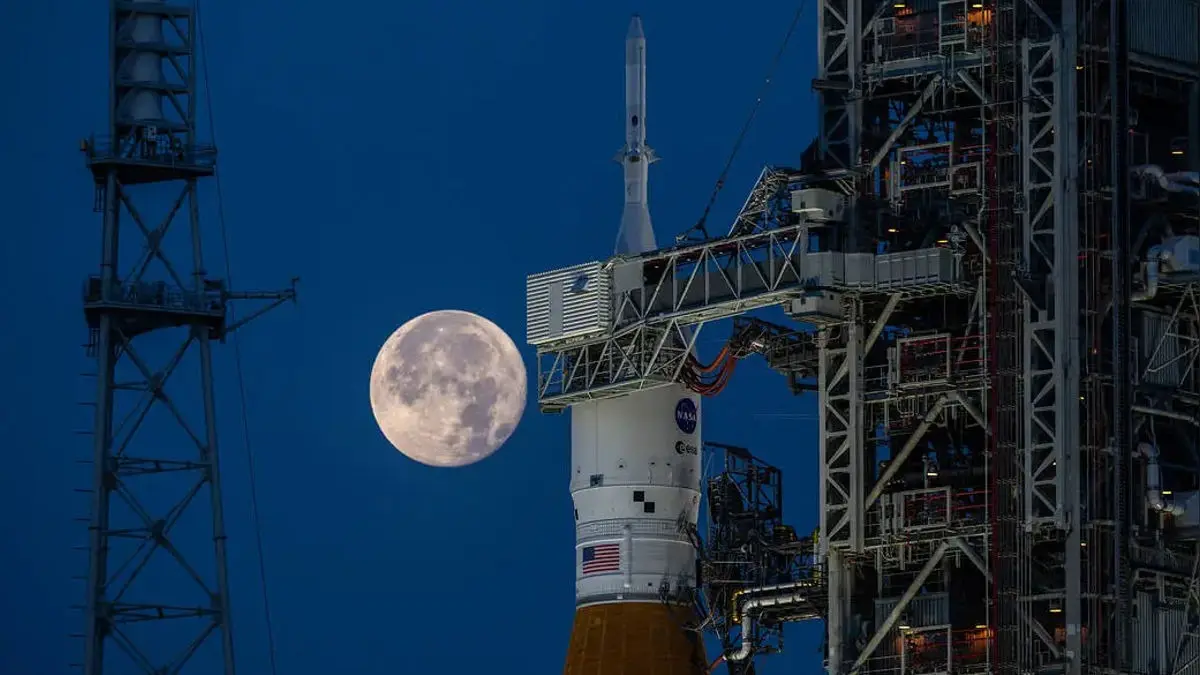
New Delhi: NASA is making final preparations to send astronauts back to the Moon for the first time in more than 50 years with its Artemis II mission, a historic crewed flight scheduled for early February 2026.
The upcoming mission marks a major milestone in NASA’s Artemis program, which aims not only to return humans to lunar orbit but also to pave the way for future landings and a sustained human presence on and around the Moon.
At the heart of the mission is NASA’s powerful Space Launch System (SLS) rocket and the Orion spacecraft, named Integrity, now prepared for rollout to Launch Pad 39B at the Kennedy Space Center. The rollout, expected to begin around January 17, 2026, will begin a final phase of testing and countdown preparations ahead of the targeted launch as early as February 6.
Crewed Flight After Decades
Artemis II will carry four astronauts, NASA’s Reid Wiseman, Victor Glover, Christina Koch, and Jeremy Hansen from the Canadian Space Agency, on a roughly 10-day journey that will send them around the Moon and back to Earth. While the mission will not include a lunar landing, it will test critical life-support systems and spacecraft performance with humans onboard in deep space conditions.
The flight will place the crew on a “free-return” trajectory, taking them beyond the Moon and allowing Earth’s gravity to draw the spacecraft back for a planned splashdown in the Pacific Ocean upon return. This type of trajectory ensures a secure path to home even if propulsion systems are not used on the return leg.
Final Preparations
NASA engineers and technicians are completing prelaunch tests including a wet dress rehearsal, a full fueling test with cryogenic propellants and other system checks to ensure the spacecraft and rocket are ready for human occupants. Crew safety remains a top priority as the agency works through these final milestones.
Despite a recent medical evacuation of astronauts aboard the International Space Station (ISS), NASA officials have assured that the Artemis II timeline remains unaffected and preparations continue without delay.
A New Era of Lunar Exploration
Artemis II builds on the success of the uncrewed Artemis I test flight and sets the stage for Artemis III, which aims to return humans to the lunar surface.
As NASA moves closer to liftoff, the Artemis II mission symbolizes both a technological leap and a renewed era of human exploration beyond Earth, reigniting ambitions to explore the Moon and eventually missions to Mars.
Published January 15th 2026, 20:32 IST