Add Republic As Your Trusted Source




Add Republic As Your Trusted Source
Advertisement
Updated September 24th 2025, 11:35 IST
Why NASA Pushed Artemis 2 Crewed Moon Mission to 2026
The delay was triggered by issues in the Orion capsule. While temperatures inside the capsule stayed safe, gases trapped in the heat shield during Artemis 1 caused uneven erosion and cracking of the material.


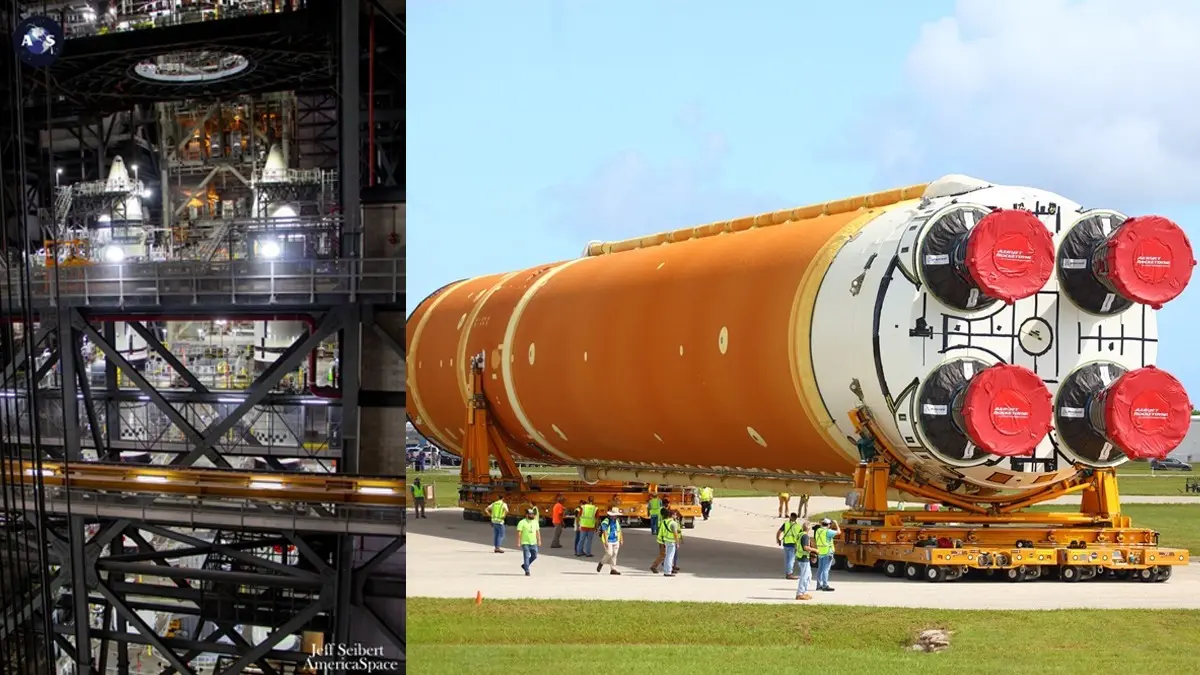
Washington: NASA had announced on December 5, 2024, that Artemis 2, the first crewed mission to orbit the moon since Apollo 17 in 1972, had been delayed from September 2025 to February 2026. The Artemis 3 lunar landing, originally slated for late 2026, has also been rescheduled for mid-2027.
At the heart of the delay are technical refinements to Orion, the spacecraft that will carry four astronauts on a 10-day journey around the moon and back. Though Orion has flown successfully twice — once in Earth orbit in 2014 and again during the uncrewed Artemis 1 lunar mission in 2022 — engineers uncovered an unexpected issue with its heat shield.

During Artemis 1, Orion performed a "skip reentry", briefly dipping into Earth’s atmosphere before bouncing back out and returning again — a maneuver designed to safely bleed off the extreme energy of a lunar return. While temperatures inside the capsule stayed safe, engineers found that gases trapped in the heat shield during this maneuver caused uneven erosion and cracking of the material.
“Space is demanding,” NASA Administrator Bill Nelson had told reporters. “We, along with our industry and international partners, need this time to ensure Orion is ready to safely deliver our astronauts to deep space and back to Earth.”
NASA Deputy Administrator Pam Melroy had explained that the unusual wear pattern resulted from heat buildup during the skip trajectory, which led to trapped gases and cracking. However, the shield itself performed its job and will not require a redesign. Instead, engineers will adjust the Artemis II reentry trajectory to limit exposure to the problematic temperature range.
As a result, Orion will splash down closer to San Diego than previously planned, allowing faster recovery and support if needed.
While the heat shield drew the most attention, NASA said other technical issues also informed the revised schedule, including an Orion battery problem and fine-tuning of its environmental control and life-support systems.
Had a redesign of the shield been necessary, the mission could have slipped into late 2026 or beyond. Instead, the new February 2026 timeline reflects the additional time needed to complete testing and ensure crew safety.
Artemis 2 will mark the first time humans leave low Earth orbit in more than 50 years, paving the way for Artemis 3 — a crewed landing near the lunar south pole, now expected in 2027.
Published September 24th 2025, 11:31 IST