Add Republic As Your Trusted Source




Add Republic As Your Trusted Source
Advertisement
Updated April 6th 2026, 11:54 IST
Arattai Brings Back Broadcast Messaging With Privacy Focus, Takes on WhatsApp’s Popular Feature
Arattai, the Indian messaging app launched by Zoho in 2021, has reintroduced broadcast messaging with end-to-end encryption and a privacy-first approach. Unlike WhatsApp’s broadcast lists or Telegram’s public channels, Arattai delivers one-to-many messages individually, keeping replies private and avoiding group clutter. The app is back in the spotlight in 2026 as it seeks to differentiate itself in a crowded market dominated by global players, emphasising user control and secure communication.


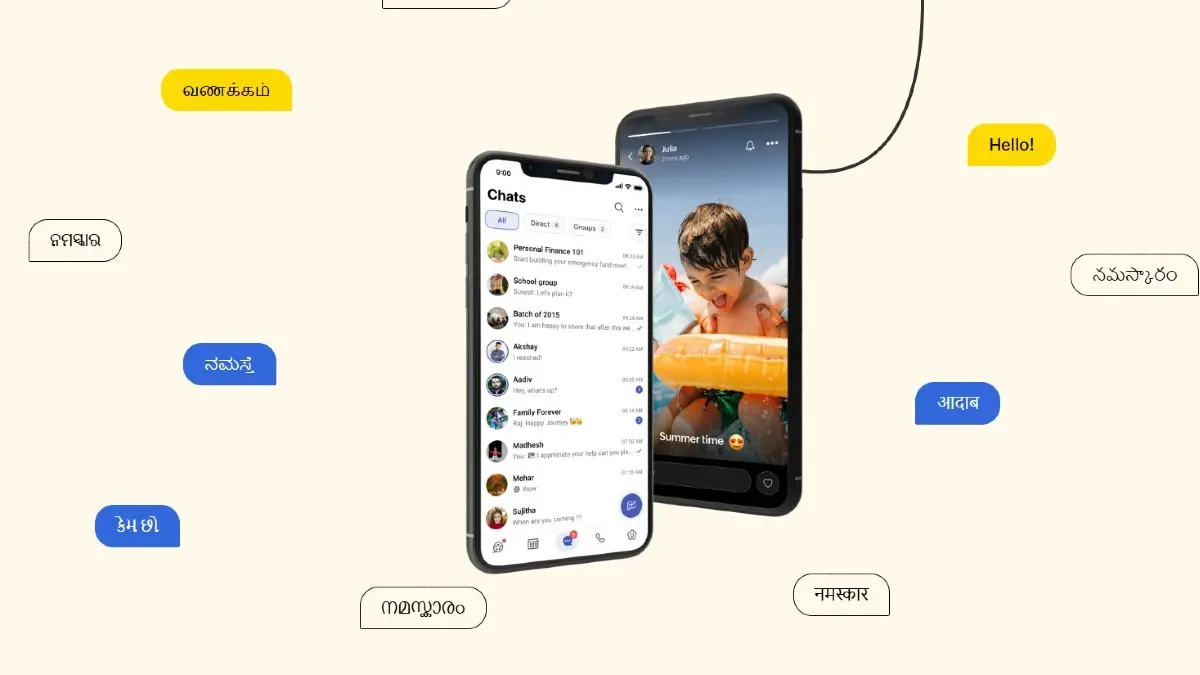
The made-in-India messaging app is reviving a familiar tool but with a sharper pitch around privacy and control. Arattai has reintroduced its broadcast messaging feature, allowing users to send one message to multiple contacts at the same time without creating a group chat.
The feature is designed for simple use cases- sharing updates, announcements, or reminders with many people in one go. Instead of managing multiple chats or forming groups, users can now reach a wider audience with a single action. Each message is delivered individually to recipients, meaning replies remain private and conversations stay separate.
How It Works in Practice
The functionality is straightforward. Users select multiple contacts, compose a message, and send it as a broadcast. On the receiving end, the message appears like a normal one-to-one chat and not a group message.
This solves a common problem with group chats- clutter. It also avoids exposing phone numbers or identities to others in the list, which can be a concern in larger groups.
For users who regularly send the same update to many people like event organisers or small business owners, this can simplify communication significantly.
Privacy at the Core
Arattai says the feature is protected with end-to-end encryption. In simple terms, only the sender and recipients can read the message and not even the platform itself can access it.
This is important because broadcast-style messaging often raises privacy concerns, especially around how data is handled or who can see the conversation.
How It Compares With Competitors
Broadcast messaging is not new. WhatsApp has long offered a similar feature through its broadcast lists. However, WhatsApp places certain limits - for example, recipients typically need to have the sender saved in their contacts to receive broadcast messages.
Other platforms like Telegram approach this differently. Telegram focuses more on channels and groups for one-to-many communication, which are more public and less private compared to broadcast lists.
Arattai’s approach sits somewhere in between. It keeps the one-to-many convenience but avoids turning messages into public or semi-public streams. The emphasis is clearly on controlled, private distribution.
What Arattai Claims Is Different
Arattai is highlighting three key differences in its pitch:
Privacy-first delivery: Messages remain encrypted and are not visible to anyone outside the sender and recipients
No group exposure: Recipients do not see each other, reducing spam risks and privacy concerns
Cleaner communication: No group threads means less noise and better message clarity
While these ideas are not entirely new, the company is trying to package them as a more balanced alternative to existing tools.
Why This Matters Now
Messaging apps are increasingly being used for more than just chats. People rely on them for business updates, community coordination, and announcements.
By bringing back broadcast messaging, Arattai is clearly aiming to stay relevant in a space dominated by larger players. The challenge will be convincing users to switch or adopt another platform when established apps already offer similar features. Still, with a growing focus on data privacy and user control, even small differences in how features are implemented can matter.
Published April 6th 2026, 11:54 IST