Add Republic As Your Trusted Source




Add Republic As Your Trusted Source
Advertisement
Updated March 10th 2026, 15:05 IST
Blue Mushroom Clouds Spotted In Tehran As US, Israel Hit Iran's Key Energy Sites | VIDEO
Large explosions lit up Tehran’s night sky with bright blue flashes and mushroom‑like clouds as renewed US, Israel hit key Iranian energy facilities. Overnight raids reportedly hit multiple oil depots and energy‑related sites in and around Tehran and Karaj, causing major fires, thick smoke, and widespread videos of blue‑tinged blasts lighting up the skyline.


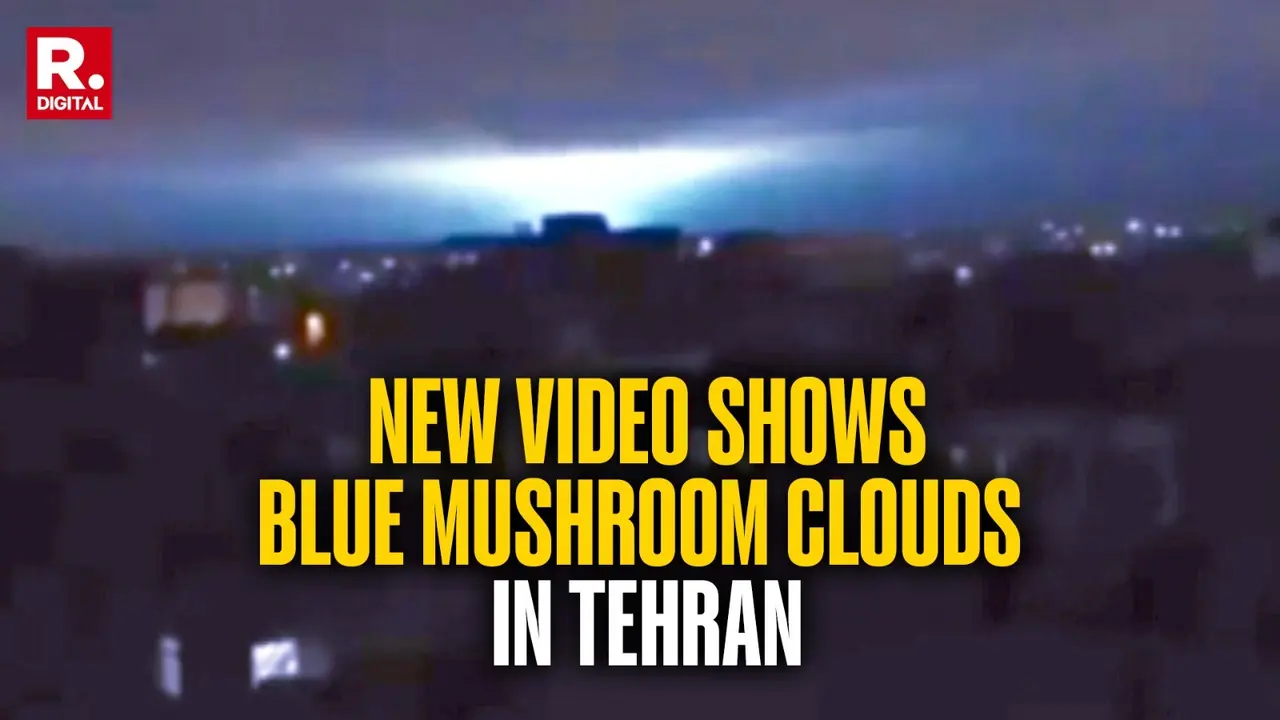
Tehran: Flashes of blue light were reported over parts of Tehran overnight as large explosions continued to rock Iran on Tuesday. Key Iranian energy facilities were struck during continued U.S.-Israeli bombardment, Iranian media reported.
Videos circulating on social media showed dramatic blue flashes and mushroom-shaped clouds lighting up the night sky over the Iranian capital and nearby Karaj, with witnesses saying the explosions illuminated large sections of the city. The phenomenon reportedly occurred after energy infrastructure sites were hit in overnight strikes.
Key Energy Sites Struck
Iranian state media said key energy sites were targeted during the attacks, as the conflict between Iran, Israel and the United States entered its second week. Earlier strikes had already hit multiple oil depots and petroleum transport facilities in and around Tehran, triggering massive fires and thick plumes of smoke across the capital.
The latest bombardment reportedly struck several locations across Tehran with greater intensity and a wider geographic spread than earlier waves of attacks. Explosions were also reported in the nearby city of Karaj as airstrikes continued overnight.
Earlier, Iran’s army said it had launched a retaliatory drone attack targeting Israel’s largest oil refinery in Haifa. Iranian officials also accused Washington and Tel Aviv of causing heavy civilian casualties during the ongoing campaign. According to reports, a government spokesperson said 193 children had been killed in the strikes carried out by U.S. and Israeli forces.
Blue Mushroom Clouds After Black Rain
The unusual blue glow in the sky was widely shared online after new videos emerged showing what appeared to be bright flashes and mushroom-like clouds above Tehran during the explosions. This comes a day after residents in Tehran reported a strange environmental phenomenon described as “black rain.” Following earlier airstrikes on fuel storage facilities in the city, residents said oily residue fell with rainfall, coating buildings, vehicles and roads while the air smelled strongly of burning petrol. Fires at oil depots released large quantities of soot, hydrocarbons and other pollutants into the atmosphere, creating dark clouds that later mixed with rainfall. Reports suggested the polluted rain left an oily film across parts of the capital and caused respiratory irritation among residents.
The escalating West Asia war entered its day 11 on Tuesday, which was triggered after the US and Israel jointly launched airstrikes into the Iranian territory on February 28, targeting its top leadership, military bases and energy facilities. It led to the death of Iran's supreme leader Ayatollah Ali Khamenei bringing a nearly 40-year era to an abrupt closure, and altering the geopolitical situation in the region.
The campaign has since expanded into a broader regional confrontation, with both sides exchanging strikes across multiple locations. U.S. President Donald Trump said on Monday that the military operation could end soon, describing the intervention as a “short-term excursion” aimed at eliminating regional threats.
Published March 10th 2026, 15:00 IST