Add Republic As Your Trusted Source




Add Republic As Your Trusted Source
Advertisement
Updated July 24th 2025, 21:53 IST
Dogfights and Deterrence: Air Dominance Alone Enough To Determine Victory
This report examines the triggers, key events, outcomes, and broader implications of the conflict, drawing on various sources to provide a detailed overview.


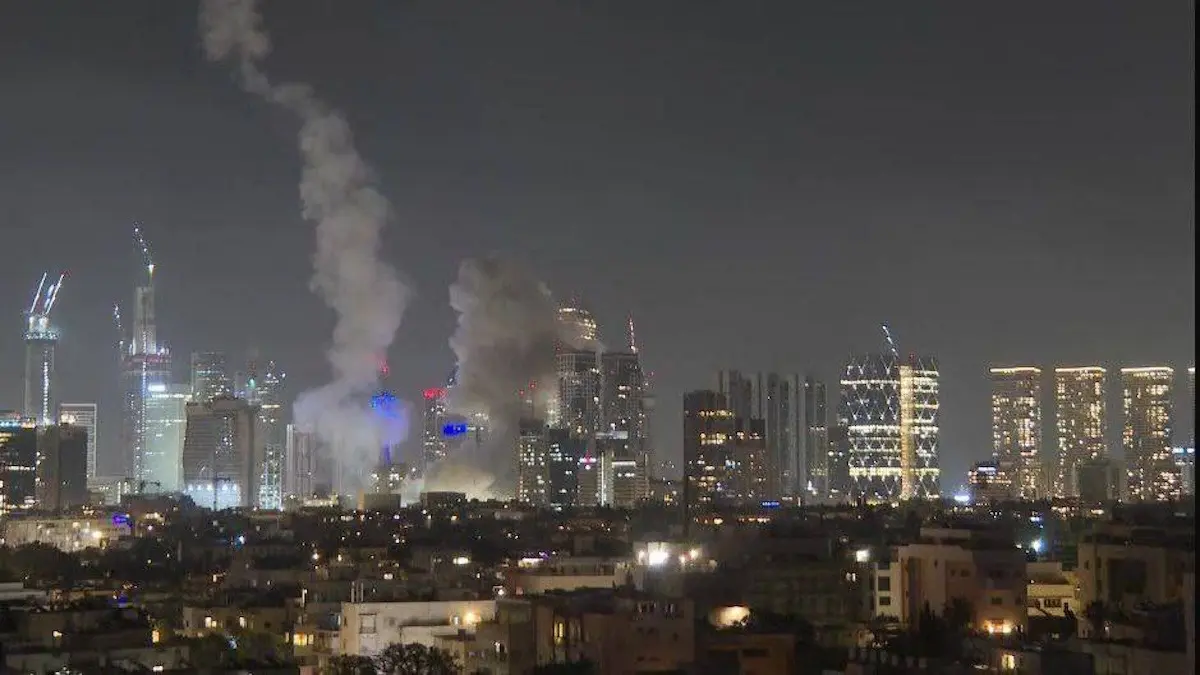
Tel Aviv: The Iran-Israel conflict, often termed the Twelve-Day War, erupted on June 13, 2025, and concluded with a fragile ceasefire on June 24, 2025. Sparked by an International Atomic Energy Agency (IAEA) resolution declaring Iran non-compliant with its nuclear obligations, the conflict involved intense military engagements, significant loss of life, and far-reaching geopolitical consequences. This report examines the triggers, key events, outcomes, and broader implications of the conflict, drawing on various sources to provide a detailed overview.
Triggers of the Conflict
On June 12, 2025, the IAEA Board of Governors passed a resolution, drafted by the United States, United Kingdom, France, and Germany, declaring Iran in breach of its nuclear non-proliferation obligations for the first time since 2005. The resolution cited Iran’s failure to provide credible explanations for undeclared nuclear materials and activities at multiple sites, raising concerns about its stockpile of enriched uranium, which could potentially produce nuclear weapons. Iran responded by announcing plans to establish a new enrichment facility and upgrade its centrifuges at Fordow, escalating tensions. This resolution provided the immediate trigger for Israel’s preemptive military action, as it perceived Iran’s nuclear program as an existential threat.
Israel’s Strategic Moves and Operation Rising Lion
Israel’s military campaign, codenamed Operation Rising Lion, began on June 13, 2025, with surprise airstrikes targeting Iranian nuclear facilities, military bases, and command centers. The operation was preceded by strategic moves over the previous 18 months, including:
- October 2024: The Israel Defense Forces (IDF) accelerated planning for a campaign against Iran, leveraging intelligence and capabilities developed over decades. This followed Iran’s missile attack on Israel in October 2024, prompting heightened military preparations.
- November 2024: The IDF and Israeli Air Force (IAF) identified Iran’s “centers of gravity,” including its nuclear program, ballistic missile capabilities, and military leadership, during a joint conference.
- Covert Operations: Israel conducted sabotage and assassinations, notably targeting Hezbollah leaders in 2024, weakening Iran’s regional proxies and air defenses.
The initial strikes eliminated key Iranian figures, including Brig. Gen. Amir Ali Hajizadeh, commander of the IRGC’s air force, and nine nuclear scientists. Over 200 Israeli jets struck more than 100 targets, including the Natanz nuclear facility and ballistic missile sites. These actions disrupted Iran’s command and control, delaying its response for nearly a day.
Iran’s Retaliation and Missile Accuracy
Iran retaliated with Operation True Promise 3, launching over 550 ballistic missiles and 1,000 drones targeting Israeli cities and military sites. While Israel’s multi-layered defense systems, including Iron Dome, David’s Sling, and Arrow, intercepted approximately 86% of the missiles, some penetrated, causing significant damage in Tel Aviv, Haifa, and Beersheba. The unreported accuracy of these strikes, particularly on strategic targets like the Kirya military headquarters, likely pressured Israel and the U.S. to seek a ceasefire. Iran’s missile arsenal, including the Qassem and Zolfaqar missiles, demonstrated improved precision, challenging Israel’s defenses.
U.S. Involvement and the Fordow Bombings
On June 22, 2025, the U.S. intervened, deploying six B-2 stealth bombers to drop GBU-57 Massive Ordnance Penetrator bombs on the Fordow nuclear facility, alongside cruise missile strikes on Natanz and Isfahan. Satellite imagery revealed significant damage, including craters and blocked tunnel entrances at Fordow, but assessments suggest the core underground infrastructure remained largely intact. The bombings were largely symbolic, setting back Iran’s nuclear program by only a few months, as enriched uranium stocks were reportedly moved prior to the strikes.
Aspect | Details |
Target | Fordow, Natanz, Isfahan nuclear sites |
Weapons Used | GBU-57 bunker busters, Tomahawk cruise missiles |
Damage Assessment | Entrances sealed, some centrifuges intact, program delayed by months |
Source | Business Insider: Satellite Images of Fordow |
Ceasefire and Claims of Victory
A U.S.-brokered ceasefire took effect on June 24, 2025, mediated by Qatar. Both Israel and Iran accused each other of violations, but the truce held. All parties claimed victory:
- Israel: Asserted it had removed the existential threat of Iran’s nuclear program and degraded its military capabilities.
- Iran: Celebrated its missile strikes as a demonstration of resilience and retaliatory power.
- U.S.: Highlighted the success of its strikes in supporting Israel and weakening Iran’s nuclear ambitions.
These conflicting narratives reflect the ambiguity of the conflict’s outcomes, with ongoing debates about the extent of damage to Iran’s nuclear infrastructure.
Regional and Global Implications
Abraham Accords
The conflict tested the Abraham Accords, with Gulf states permitting Israeli use of their airspace, indicating security cooperation against Iran. However, the lack of progress on the Palestinian issue remains a significant roadblock to expanding these accords. The conflict may have strengthened the case for further normalization, with reports of potential inclusion of Syria, Lebanon, and Saudi Arabia in July 2025.
China’s Limited Role
China, a major importer of Iranian oil, condemned Israel’s actions and called for de-escalation but lacked the leverage to mediate effectively. Its response was confined to diplomatic statements, highlighting its limited strategic influence in the conflict.
Turkey’s Concerns
Turkey, wary of regional instability, increased its defense investments but avoided direct involvement. The conflict raised concerns about Turkey’s energy security, given its reliance on Iranian gas, and its growing rivalry with Israel in Syria.
IMEC Challenges
The India-Middle East-Europe Economic Corridor (IMEC) faced risks due to Iran’s threats to disrupt maritime traffic through the Strait of Hormuz and Bab el-Mandeb Strait. Iran’s missile attacks on Haifa further jeopardized the port’s role in IMEC. However, a weakened Iran could facilitate IMEC’s advancement by reducing regional interference.
Deterrence Redefined
The conflict altered deterrence dynamics in the region. Israel’s willingness to launch preemptive strikes and the U.S.’s intervention demonstrated a new threshold for action against Iran’s nuclear ambitions. Iran’s retaliatory missile strikes, while partially successful, exposed limitations in its firepower, shifting the deterrence balance in Israel’s favor. This new threshold suggests that future provocations may face swift military responses.
Ongoing U.S.-Iran Talks
Despite the conflict, secret talks between the U.S. and Iran continued, with reports of planned negotiations in Oman. The conflict disrupted a scheduled sixth round of talks, but both sides expressed willingness to resume discussions, focusing on Iran’s nuclear program and sanctions relief.
Comparison with Operation Sindoor
The Iran-Israel conflict shares parallels with Operation Sindoor, a brief India-Pakistan conflict in May 2025. Triggered by a terrorist attack in Pahalgam, India launched missile strikes on terrorist infrastructure in Pakistan, codenamed Operation Sindoor. Both India and Pakistan claimed victory, mirroring the Iran-Israel conflict’s narrative. This highlights the tendency for nations to assert success in ambiguous conflicts, emphasizing the need for a robust military-industrial complex, as noted in the context of India.
The Iran-Israel 12-day conflict of June 2025 was a pivotal event that highlighted the complexities of Middle Eastern geopolitics. While Israel achieved tactical successes, the strategic impact on Iran’s nuclear program remains limited. The conflict underscored the importance of regional alliances, the challenges facing initiatives like IMEC, and the need for diplomatic efforts to manage ongoing tensions. The parallels with Operation Sindoor reflect broader patterns in regional conflicts, where narrative victories often overshadow tangible outcomes.
Published July 24th 2025, 21:53 IST