Add Republic As Your Trusted Source




Add Republic As Your Trusted Source
Advertisement
Updated January 15th 2026, 09:51 IST
From Revolutionary Guard to Rented Guns: The Meaning of Khamenei’s Iraqi Militia Strategy
The Islamic Revolutionary Guard Corps was created as a Praetorian force, ideologically committed and personally loyal to the Supreme Leader. It was meant to protect the revolution not only from foreign enemies, but from Iranians themselves.


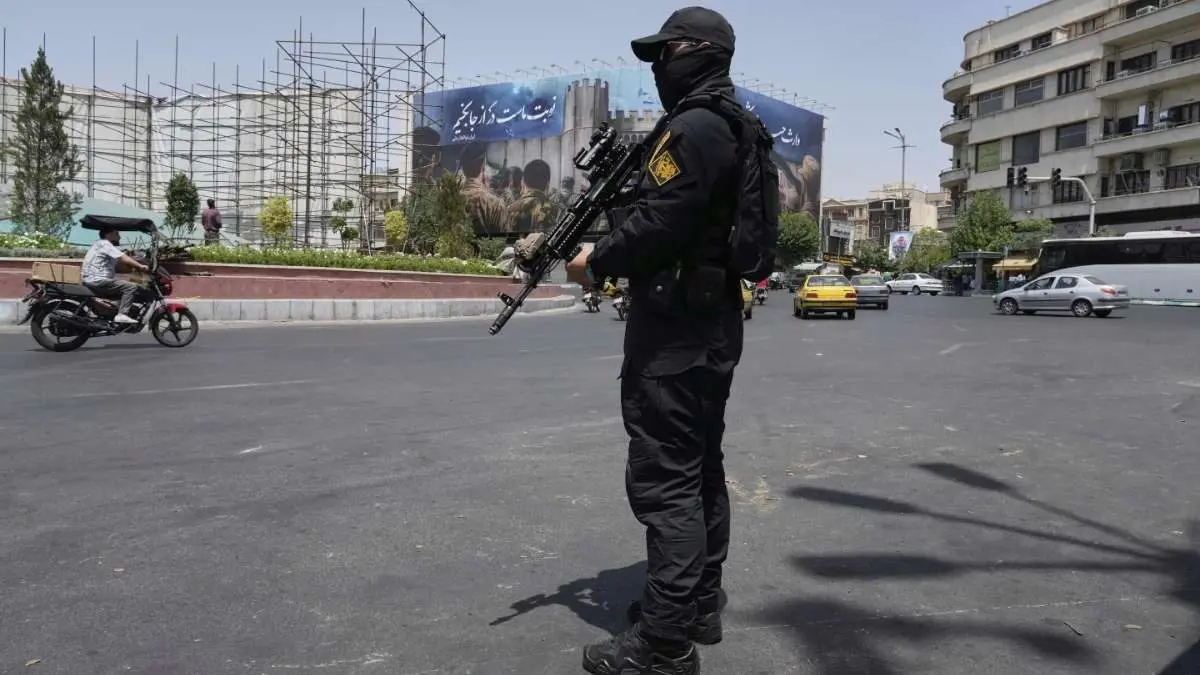
When a regime that claims revolutionary legitimacy begins outsourcing repression to foreigners, it is no longer projecting strength. It is exposing fear. Supreme Leader Ali Khamenei’s reported reliance on Iraqi militias to suppress unrest inside Iran is not a tactical adjustment born of confidence; it is a strategic confession of vulnerability. It reveals how far the Islamic Republic has drifted from its own foundations - and how deeply it now distrusts its own people.
For decades, the Islamic Republic built its internal security on a single, ironclad assumption: loyalty. The Islamic Revolutionary Guard Corps was created as a Praetorian force, ideologically committed and personally loyal to the Supreme Leader. It was meant to protect the revolution not only from foreign enemies, but from Iranians themselves - whether those threats emerged from the regular army, reformist politicians, or the streets.
If Khamenei now feels compelled to look beyond this force, the conclusion is unavoidable: he no longer fully trusts the Guards to do what authoritarian systems ultimately demand of their enforcers - kill their own people without hesitation.
This erosion of trust has been years in the making. Iranian society has undergone a profound transformation. The generation now protesting has no emotional connection to the 1979 revolution, no reverence for clerical authority, and no patience for ideological slogans that fail to put food on the table. What is more dangerous for the regime is that this generational shift is reflected inside the security forces themselves. Guardsmen share the same collapsing economy, the same inflation-ravaged salaries, and the same resentment toward corruption and elite privilege.
Repression becomes unreliable when it turns personal.
A soldier may obey an order to fire on a nameless crowd. He hesitates when that crowd includes classmates, cousins, neighbors, and fellow veterans. Khamenei understands this instinctively. He knows that mass protests are not defeated by sermons or televised threats, but by men willing to pull triggers without doubt. When that certainty erodes, regimes look for enforcers who have no emotional, social, or cultural connection to the population they are ordered to suppress.
Foreign militias provide exactly that distance.
This is why Iraqi militias have become so attractive to Tehran. Fighters drawn from across the border do not see Iranian protesters as family or friends. They do not share childhood memories, wartime sacrifices, or national trauma. To them, an Iranian demonstrator is not a mirror of their own society; he is simply an assignment. That emotional detachment is a powerful asset to a regime struggling to maintain control.
There is also a cold economic logic behind this choice. Iraq’s economy, battered but recovering more than two decades after the fall of Saddam Hussein, is functioning. Oil revenues flow, salaries are paid, and militias remain financially viable. Iran’s economy, by contrast, is in freefall. Sanctions, corruption, and decades of mismanagement have hollowed it out. The currency has collapsed, inflation is relentless, and even the regime’s own security forces feel financially squeezed.
Ideology may justify violence, but money sustains it.
For Iraqi militiamen, steady pay matters. For Tehran, outsourcing repression to forces that can be reliably compensated is no longer optional - it is practical necessity. This is the unspoken truth behind Khamenei’s turn to Iraqi militias: the Islamic Republic can no longer afford to rely exclusively on its own institutions.
Yet the most damning reason for this reliance is legitimacy - or rather, the absence of it. Khamenei once claimed divine authority and revolutionary mandate. Today, he governs almost entirely through coercion. A state that must import foreign gunmen to maintain order is tacitly admitting that it no longer rules by consent, belief, or even fear generated organically within society. It rules by rented violence.
That should concern observers far beyond Iran.
The involvement of Iraqi militias inside Iran shatters the long-standing fiction that these groups are merely nationalist or defensive actors. While religious calls were once issued to mobilise against the Islamic State, many of these militias predate those appeals and merely cloak themselves in borrowed legitimacy. Their willingness to operate beyond Iraq’s borders, in defense of Tehran’s interests and against Iranian civilians, reveals where their true loyalties lie.
Western policymakers have made this mistake before. For years, analysts argued that certain armed groups had evolved into nationalist movements, no longer acting as proxies. Those illusions collapsed when those same groups intervened across borders to prop up authoritarian allies. The pattern is repeating itself now. Iraqi militias operating inside Iran are not independent actors responding to regional instability; they are instruments of repression deployed by a desperate regime.
Khamenei’s decision also reflects a deep fear of historical precedent. The Islamic Republic remembers how the Shah fell - not because he lacked weapons, but because his army fractured at the critical moment. When soldiers refused to fire on civilians, the regime collapsed with stunning speed. By turning to Iraqi militias, Khamenei is attempting to ensure there is no such hesitation, no moral reckoning, no last-minute refusal.
But this strategy carries immense risk.
Foreign repression hardens domestic resistance. It transforms political protest into national humiliation. Iranians may endure brutality from their own state for a time, but brutality inflicted by foreigners - particularly Iraqis, given the traumatic memory of the Iran–Iraq War, cuts far deeper. It reinforces the perception that the regime no longer represents Iran, only its own survival.
For the United States and its allies, this moment demands clarity. Any policy that treats Iraqi militias as legitimate or benign actors must be reassessed. If foreign fighters are killing Iranians on Iranian soil at Tehran’s behest, then their commanders are not regional irritants; they are transnational enforcers of tyranny. Shielding them from accountability only emboldens further violence.
Ultimately, Khamenei’s reliance on Iraqi militias is not evidence of strength. It is proof that the Islamic Republic is running out of loyal instruments. Regimes turn to mercenaries not when they are confident, but when their internal foundations begin to crack.
Crises bring clarity. This one makes a single truth unavoidable: a state that must import repression has already lost the battle for legitimacy. What remains is force, delay, and denial. History shows that such tactics can prolong power - but they never save it.
Published January 15th 2026, 09:51 IST