Add Republic As Your Trusted Source




Add Republic As Your Trusted Source
Advertisement
Updated December 1st 2025, 18:29 IST
NIA’s Hunt for Masterminds: Kashmir Raids Reveal Pan-India Reach of Radicalised White-Collar Module
NIA conducts raids in South Kashmir targeting a ‘white-collar’ terror module linked to the Red Fort blast, exposing a network of educated professionals across India.


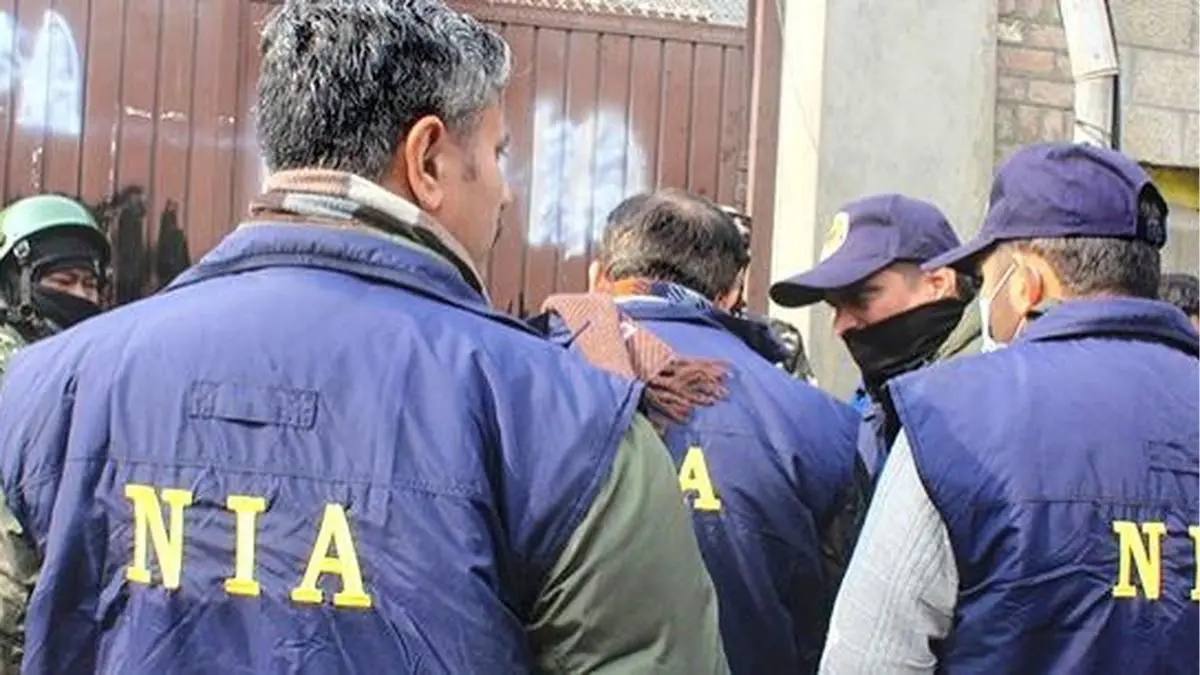
New Delhi: The National Investigation Agency (NIA) on Monday carried out fresh raids at eight locations in South Kashmir’s Pulwama, Shopian and Kulgam districts as part of its probe into the “white-collar” terror module linked to the car blast near Delhi’s Red Fort in October that killed 15 people and injured several others, officials said here.
Officials said the searches were conducted at Koil, Chandgam, Malangpora and Samboora in Pulwama, besides residences in Shopian and Kulgam.
The most significant raid was at the house of Moulvi Irfan Ahmad Wagay in Shopian, who was the mastermind of the module. Wagay, arrested in October and later taken into NIA custody, was involved in the radicalisation and recruitment of educated youth into the network.
The agency also searched the residence of Dr. Adeel Ahmad Rather, a medical professional arrested from Saharanpur in Uttar Pradesh last month. His arrest revealed the module’s reach beyond Kashmir, with operatives in professional circles across states.
“This is not a conventional terror outfit. It is a network of educated professionals that include clerics, doctors, and many more who use their social legitimacy to mask terror activities. That makes it far more dangerous,” said a senior NIA officer.
Since the Red Fort blast, the NIA has conducted over two dozen raids in Kashmir, targeting suspected hideouts and residences of individuals linked to the module.
Several arrests have been made, including Jasir Bilal Wani, who was produced in Delhi’s Patiala House Court last week and remanded to NIA custody.
Investigators say the raids have yielded digital devices, financial records and documents that are being scrutinised to trace funding channels and communication with handlers outside India.
Security officials describe the emergence of “white-collar” terror networks as a worrying trend. Unlike traditional terror groups that rely on foot soldiers, these modules recruit educated individuals capable of handling finances, logistics and communication with ease.
“The challenge for Jammu and Kashmir Police and other security agencies is that these individuals blend seamlessly into society. They are doctors, teachers, clerics etc people you wouldn’t easily suspect. That makes detection and disruption extremely difficult,” said a senior police officer here.
Pertinently, the Red Fort blast case, initially investigated by Delhi Police, was handed over to the NIA given its national security implications. The agency believes the module was designed to carry out high-profile urban attacks, using professionals who could move undetected across states. Raids in Punjab and Uttar Pradesh have already exposed linkages beyond Kashmir, pointing to a pan-India network.
Officials say the NIA is preparing a comprehensive chargesheet that will detail the module’s operations, its masterminds and its role in the Red Fort blast.
“This is not just about one incident. It is about dismantling an ecosystem that could plan the next big attack. Every raid is a step towards that goal,” an investigator while wishing anonymity said.
“For Kashmir, the raids are now a stark reminder that terrorism is evolving. The ideological battleground is no longer confined to forests and mountains; it is now in classrooms, clinics and mosques. Security agencies admit that tackling this new face of terror; respectable on the outside, lethal within, has become one of their toughest challenges yet,” said a political commentator here.
Published December 1st 2025, 18:29 IST