Add Republic As Your Trusted Source




Add Republic As Your Trusted Source
Advertisement
Updated December 4th 2025, 21:11 IST
US Lawmakers Target Sharif–Munir Duo in Scathing Letter to Blinken Over Pak's 'Human Rights Abuses'
The letter mentions how opposition leaders are held without charge and denied a fair trial. It pointed out that independent journalists are harassed, abducted, or forced into exile and women, religious minorities, and marginalized ethnic groups, particularly in Balochistan, face violence.


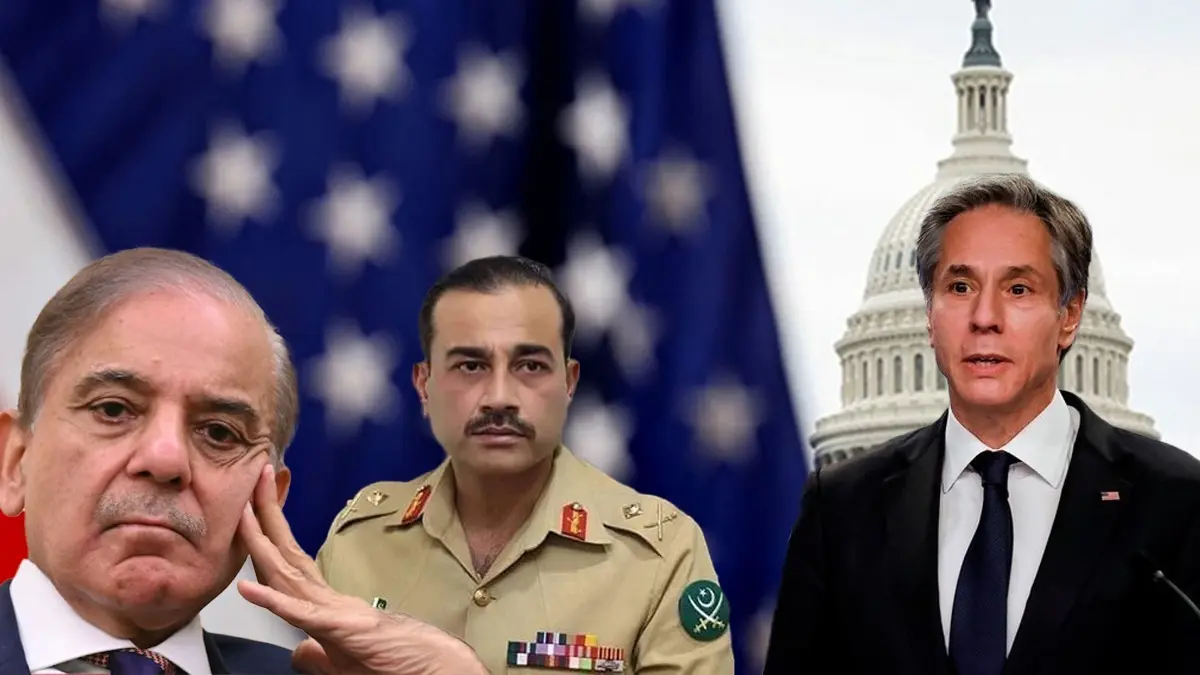
A group of U.S. lawmakers has written to U.S. Secretary of State Antony Blinken expressing urgent concern over Pakistan’s escalating campaign of transnational repression, widespread human rights abuses, and militarization under Prime Minister Shehbaz Sharif and Army Chief Asim Munir. The letter highlights specific instances of threats and retaliation against U.S.-based journalists and activists, the suppression of political opposition, and the erosion of democratic institutions in Pakistan. The lawmakers urge the U.S. to impose sanctions, including visa bans and asset freezes, and seek detailed answers on U.S. policy actions regarding Pakistan’s human rights situation.
"In recent years, U.S. citizens and residents who have spoken out against authoritarian abuses in Pakistan have faced threats, intimidation, and harassment—often extending to their families in Pakistan. These tactics include arbitrary detentions, coercion, and retaliatory violence, targeting diaspora individuals and their relatives. These actions infringe upon the right to freedom of expression guaranteed by Article 19 of the International Covenant on Civil and Political Rights, to which both Pakistan and the United States are party. Further, they set a dangerous precedent for foreign interference on U.S. soil," the letter read.
"We urge you to swiftly impose targeted measures, including visa bans and asset freezes, against officials responsible for transnational repression, widespread human rights violations, and systematic repression in Pakistan. We have called out transnational repression in other countries before and will continue to do so; the same principled approach must be applied here. Transnational repression has impacted individuals from a wide range of professional and personal backgrounds," the letter further read.

Concerns Raised by Lawmakers
-Rising transnational repression by Pakistan targeting U.S. citizens and residents who criticize the Pakistani military.
-Worsening human rights crisis under PM Shehbaz Sharif and Army Chief Asim Munir.
-Violations of freedom of expression and international law.
-Opposition leaders held without charge and denied fair trials.
-Journalists abducted, silenced, or forced into exile.
The letter mentioned how opposition leaders are held without charge, denied a fair trial, and kept in indefinite pretrial detention. It further pointed out that independent journalists are harassed, abducted, or forced into exile. The letter also stated how ordinary citizens are arrested for social media posts, while women, religious minorities, and marginalized ethnic groups, particularly in Balochistan, face disproportionate violence and surveillance.
"These are not isolated violations; they reflect a calculated campaign to crush civil society and extinguish all challenges to military rule," the letter stated.
"Peaceful dissent has been transformed into a punishable offense under military rule—with no hope of judicial justice or relief," the letter added.
Questions Posed to the Administration
1. In light of Chief of Army Staff Asim Munir’s central role in driving Pakistan’s crackdown on dissent and other authoritarian abuses, has the Department of State imposed Global Magnitsky sanctions or visa bans on Pakistani military officials—such as Munir—given credible documentation of transnational repression, serious human rights violations, and election rigging? If not, what factors have informed that decision?
2. What specific conditions would lead to the application of targeted sanctions against Pakistan’s military government?
3. What steps is the U.S. government taking to respond to Pakistan’s transnational repression of U.S. citizens and residents, including threats, harassment, and coercion directed at their family members in Pakistan?
4. During Prime Minister Shehbaz Sharif’s private meeting with President Trump on September 25, 2025, and General Asim Munir’s meeting on July 18, 2025, did President Trump raise concerns regarding democratic governance, transnational repression, human rights, and political freedoms in Pakistan? How is the Administration ensuring these priorities are reflected in U.S. policy toward Pakistan and what follow-up actions is the Administration taking to ensure these concerns are addressed in practice?
5. How will the Administration ensure that engagement with General Munir and Pakistan’s military leadership is conducted in a manner that advances U.S. commitments to democracy and human rights, while avoiding perceptions of endorsing actions that undermine these principles?
"The United States has the responsibility and tools to hold Pakistan’s military leadership accountable. We urge the Administration to swiftly impose measures, such as visa bans and asset freezes, against officials credibly perpetrating systematic repression, transnational repression, and undermining judicial independence. Such steps, alongside calls for the release of former Prime Minister Imran Khan and other political prisoners, would reinforce U.S. commitment to human rights, protect American citizens from transnational repression, and promote regional stability," the letter stated.
Published December 4th 2025, 21:11 IST